Eesti kunsti oksjonid
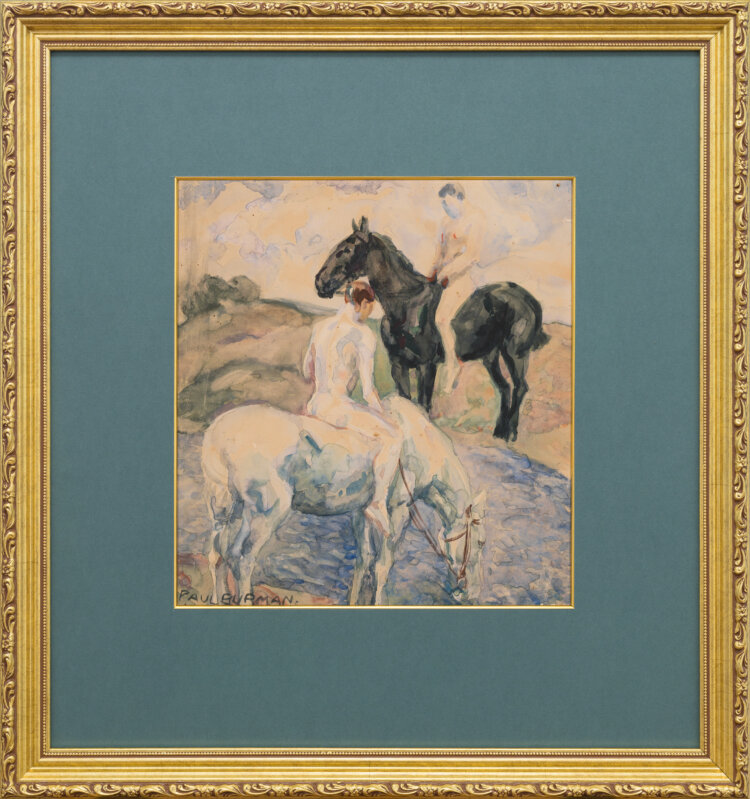
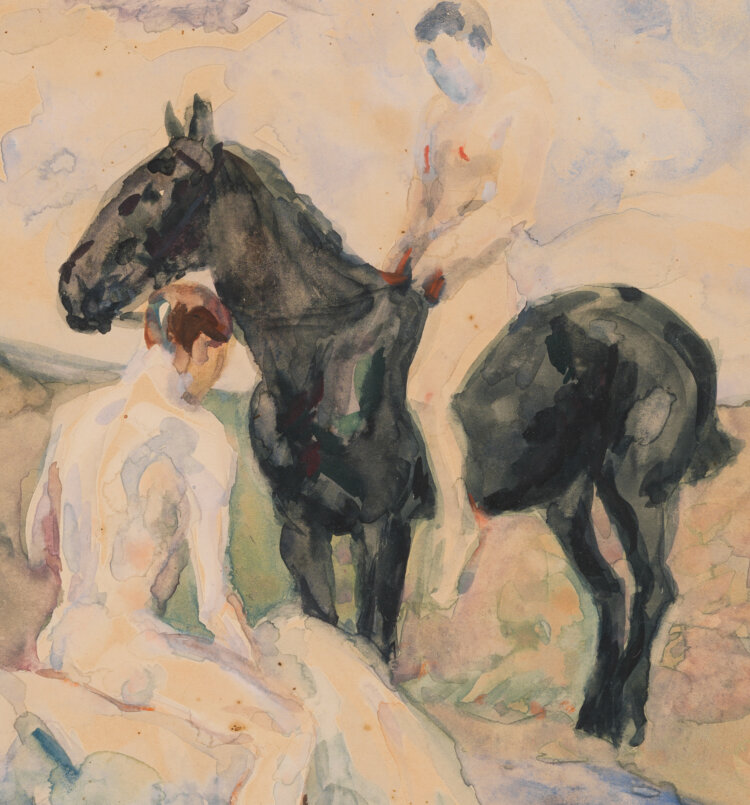
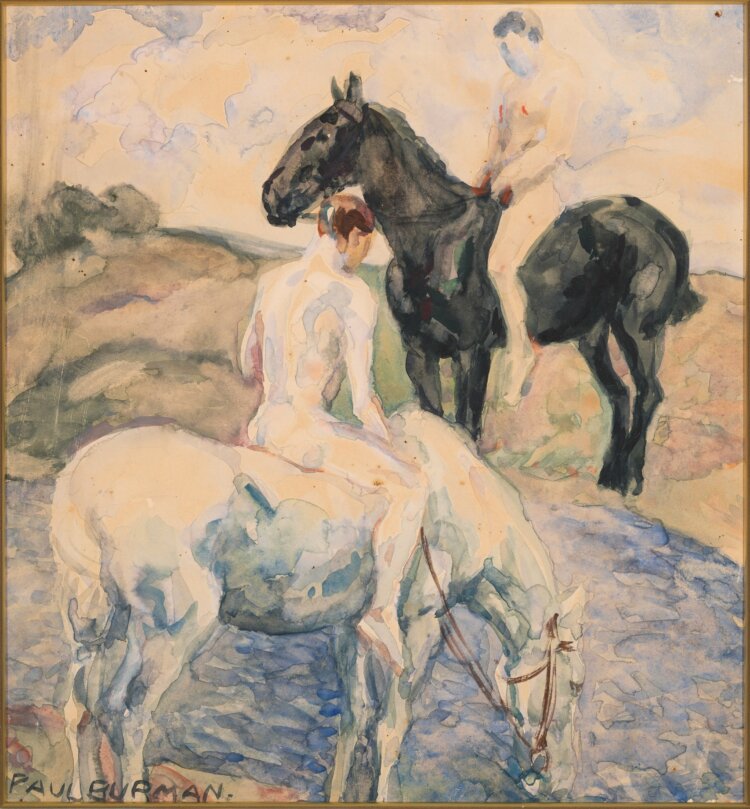
Paul Burman “Ratsanikud jõe ääres”
Sügisoksjon 2024
Gouache, watercolor on paper. Late 1910s.
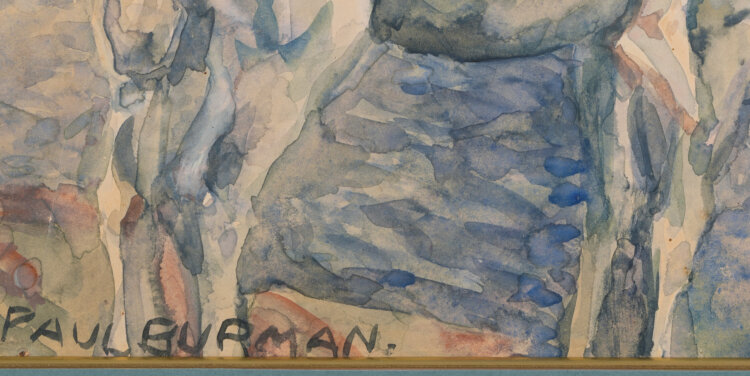
Signature: PAUL BURMAN.
| Measurements | 32 x 30 cm |
|---|---|
| Starting price | 3 500 € |
| Number of bids | 12 |
| Hammer price | 6 100 € |
Art historian Aino Kartna has written that both Lierbermann’s and Degas’ compositions of hippodrome races, boys bathing and watering horses, and a horseman by the sea were pieces that Paul Burman set as examples for himself throughout his ongoing creative path. (“Paul Burman and Animals”, Kunst, 2/3 (1965), p. 59).
The use of the nude horseman motif here may also have come from “what he saw in contemporary German, Russian or Estonian Art Nouveau or Expressionist art (Vassili Kandinsky, Max Liebermann, Kuzma Petrov-Vodkin, Ado Vabbe), which he sort of adopted,” adds art historian Mai Levin.
Burman’s love for animals began at an early age when his school notebooks were full of pencil drawings, mainly of horses, rabbits and dogs. Later, as a professional artist, he depicted them in watercolors and oil paintings. Horses became Burman’s favorite models, which he depicted both alone and with humans, or other animals.
The artist’s depiction of a naked person has been interpreted as his connection with nature as well as with the apocalyptic moods of the turn of the century. The black and white horses, of which Burman foregrounds the latter, as he often did in his later compositions, appear as both partners and opponents – like a chess opening where the players are playing against each other but only in pairs. By placing one rider on one side of the water, the other on the other, the painting, which demonstrates Burman’s masterful use of paint and brushwork, offers plenty of room for interpretation.
Text: Mai Levin, Katre Palm