
Eesti kunsti oksjonid
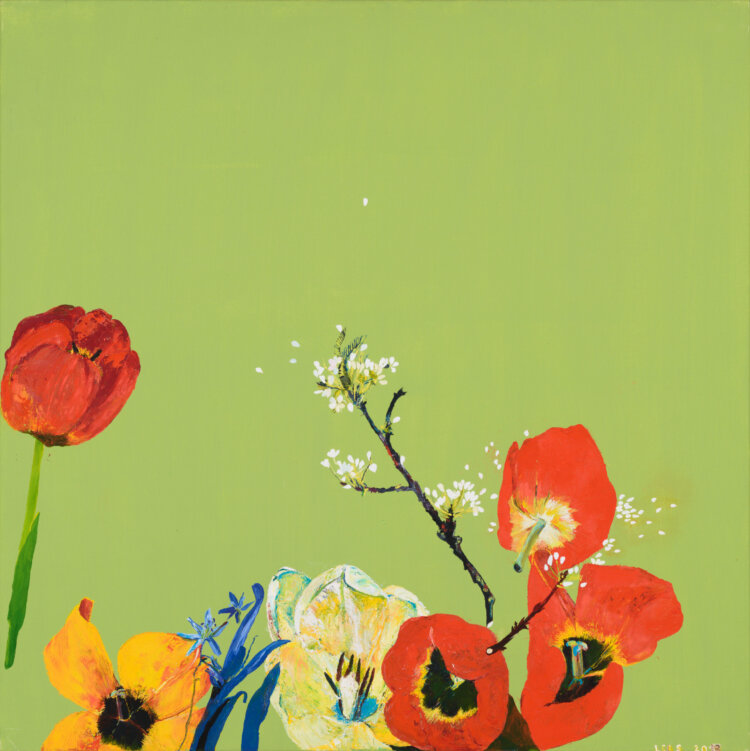
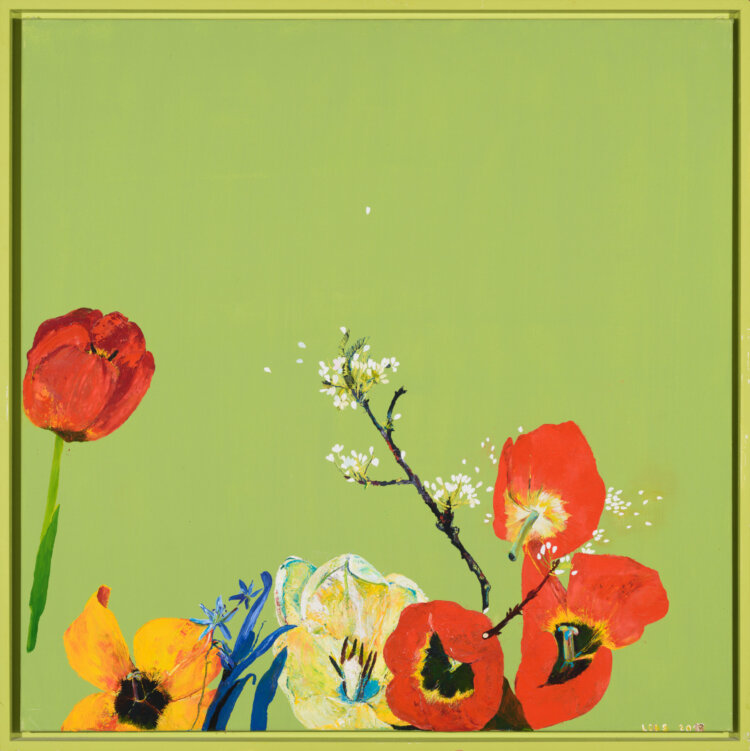

Malle Leis “Üheksavägiste maailm. Naabrid”
Sügisoksjon 2025
Oil on canvas. 2012.
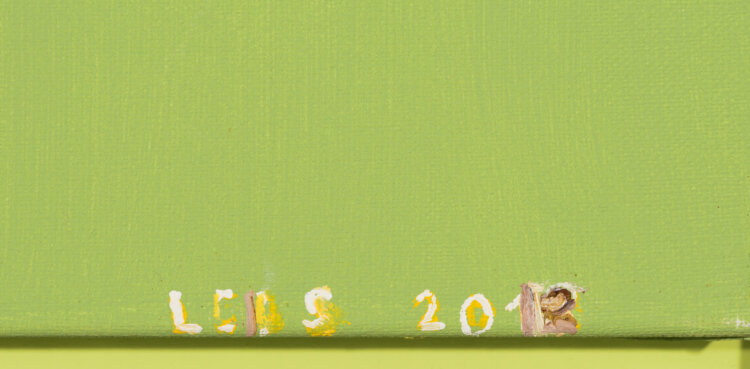
Signature: LEIS 2012 / ÜHEKSAVÄGISTE MAAILM. NAABRID MALLE LEIS 90 x 90 2012 ÕLI LÕUEND
| Measurements | 90 x 90 cm |
|---|---|
| Starting price | 8 000 € |
| Number of bids | 8 |
| Hammer price | 10 400 € |
Malle Leis (1940-2017) had a special relationship with the majestic mulleins. In an interview with art historian Tiiu Talvistu, she explained: “If you work with one plant for a long time, like these greater mulleins, you live in the world of that plant, you live in it so much that sometimes you don’t even need to paint it. It’s also a magnificent plant, it stands out from afar and is very interesting when viewed up close /…/ By the way, all of these pictures are painted from nature, birches standing under birches in a summer cottage, poppies and mulleins have always been in front of you during the painting. So each birch is a specific birch, each mullein and each poppy as well.” (“Malle Leis”, Tartu Art Museum, 2014, pp. 54-55).
This work is one of those in which the artist portrays her powerful plant in such a way that she does not even need to depict it in the painting. It is in the artist’s head and fantasies when she paints the “neighbors” – tulips and cherry blossoms swirling in the early summer wind. Here, Leis acts as a sensitive colorist and doses bright tones in exactly the right amount or, just as art historian Vappu Thurlow has said: “The human eye is a sensitive instrument and when you show it a bright color (for example, Leis’ famous fiery red tulips), you have to dose it precisely and set aside a number of broken tones to neutralize it.”
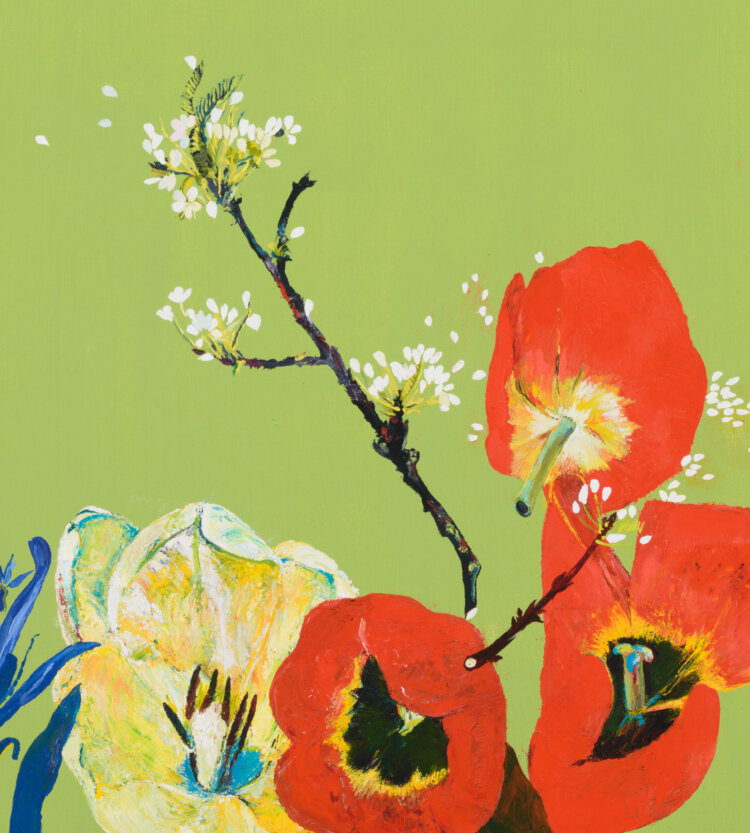
Artist Eneli Luiga adds: “The ode to beauty and spring has been conveyed with masterful precision, execution and soulfulness. Malle Leis makes the flowers communicate and, thanks to the soft movements, they seem to be on their way to eternity, coming close to Japanese aesthetics. All 52 petals floating in the air have been painted carefully and precisely, without repetition. The composition has left room for air and growth, leaving the main role to the lower part of the picture.
In the contrasting colors, it has been possible to find tones that support and harmonize each other and a perfectly tuned balance has been achieved between the soft green and the fiery red. The entire inner life of the flower world, down to the anthers, is revealed. Only through great love and dedication to nature is it possible to achieve such virtuosity.”
Text: Katre Palm, Eneli Luiga