Eesti kunsti oksjonid
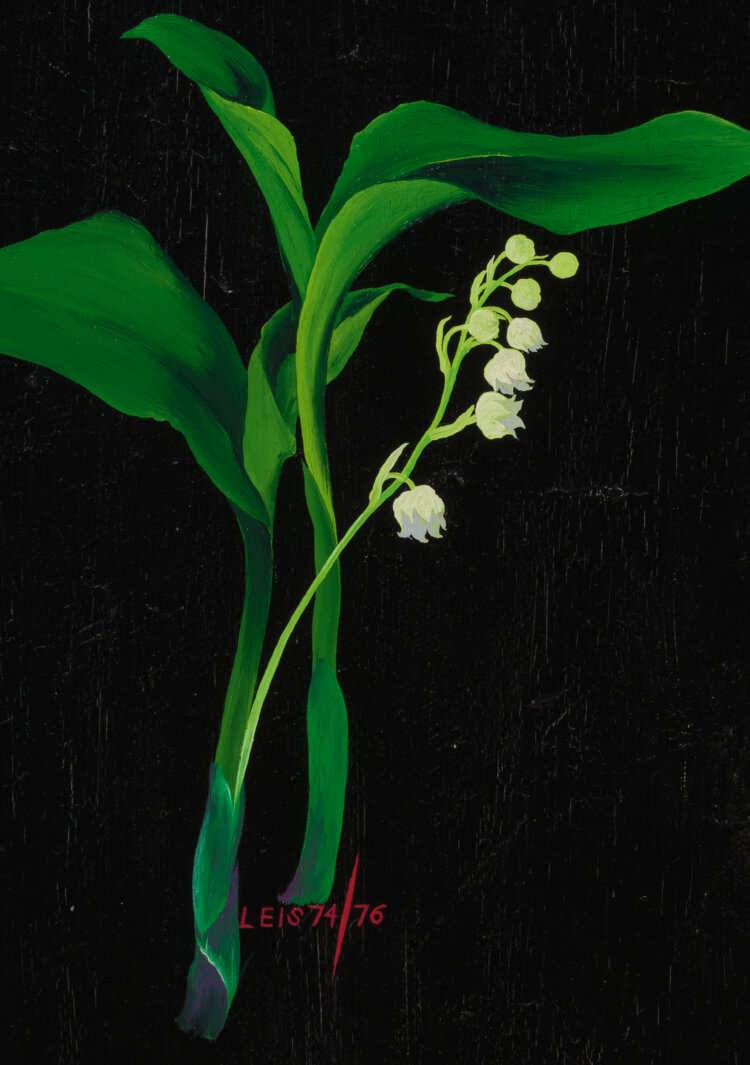
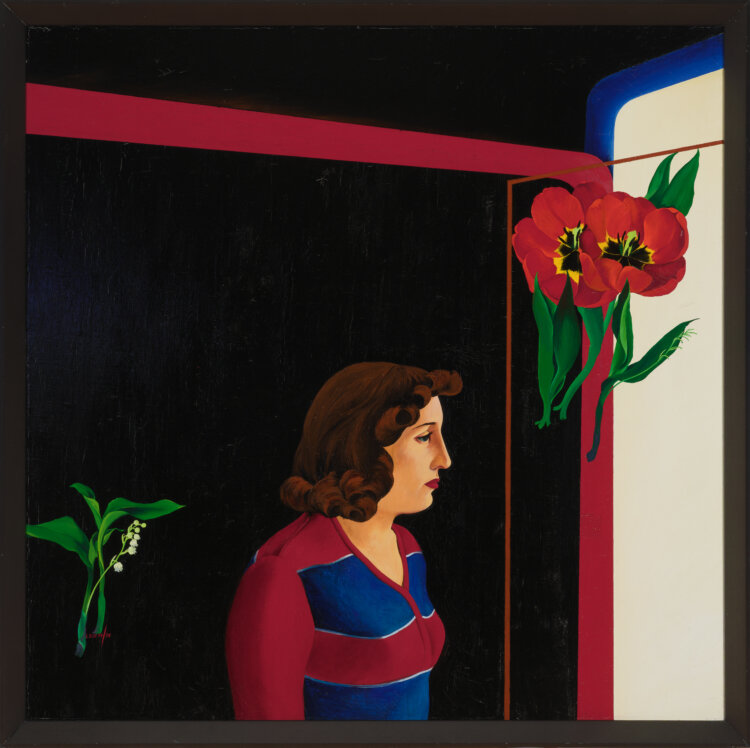
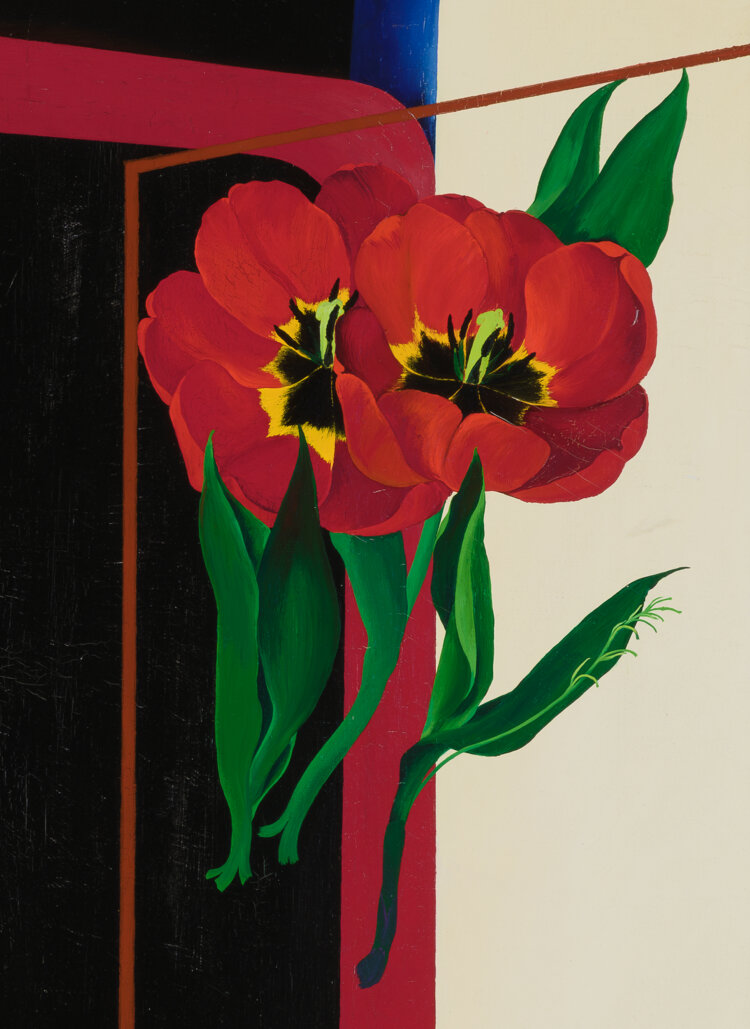
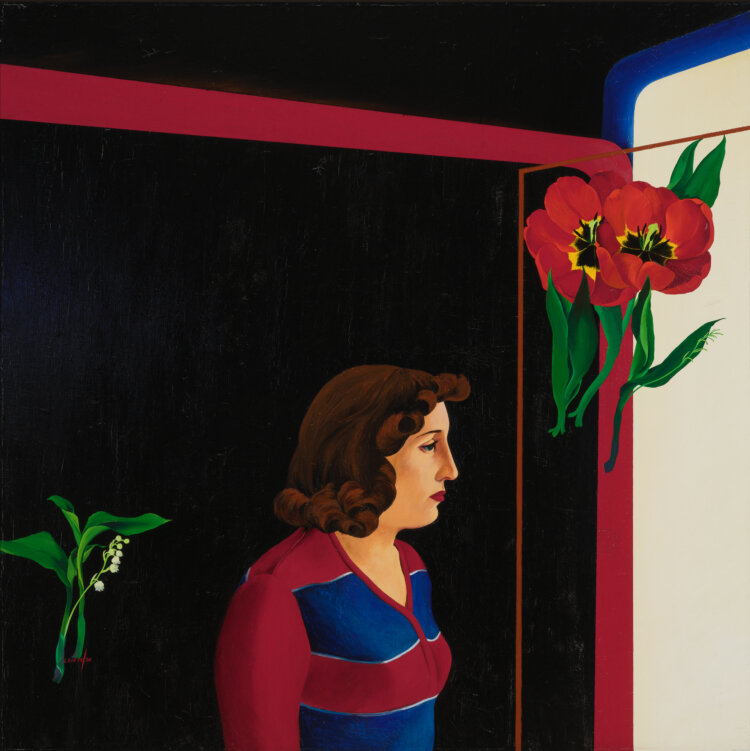
Malle Leis “Made”
Kevadoksjon 2025
Oil on canvas. 1974-76
Signature: LEIS 74/76 / MADE 100×100 1974/76 LEIS, MALLE 1940.
| Measurements | 100 x 100 cm |
|---|---|
| Starting price | 9 000 € |
| Number of bids | 49 |
| Hammer price | 31 500 € |
Malle Leis (1940-2017) is considered to be one of the most important Estonian pop artists, alongside Lapin, Keskküla and Tolts. Her geometric-abstract paintings of the 1960s often incorporated a plant motif, which became a favorite in the following decade, too, sometimes combined with a landscape element. Leis painted flowers, fruits and vegetables with precise and clear contours, preferring intense, pure colors that, when placed on a black background, powerfully highlighted the contours of the objects. Over the decades, her generalizing painting style became closer to reality but still remained flat; the colors, on the other hand, became increasingly sensitive and delicate.
Leis’ figurative paintings sometimes play with the question of objectivity. The artist preferred beautiful young people whom she gently modeled and then placed on a depthless background, highlighting the beauty of facial features and bodies. In her earlier years, she liked to paint women in eye-catching, colorful dresses that seemed to draw attention away from the face — it was somehow restrained or absent altogether. It felt as if the artist treated the living model like a flower (a beautiful object), which was characteristic of American pop art works of the period. Later, people in her paintings became more specific, giving smaller or larger hints to understand the nature of the model. “Made” also captures the thoughtful, as if absent, state of the woman.
It has been written about Leis’ works that they lack sublimation, or the transfer of energy from lower objects to higher ones. But this is where the greatest hidden messages of the artist’s pieces lie – that they were not painted with the aim of creating a clear contact between the viewer and the person or image. It is known that during the Soviet era, the bravest artists refused social dialogue for political reasons or simply out of aversion to a lying system. Thus, Leis, as a stubborn artist, also gave herself the freedom to do what was important to her, to consciously turn her back on forced topics. Thus, “Made” is like a declaration of self-thinking and decision-making, being at the same time both the face of her era and timeless at the same time.
Text: Vappu Thurlow