
Eesti kunsti oksjonid
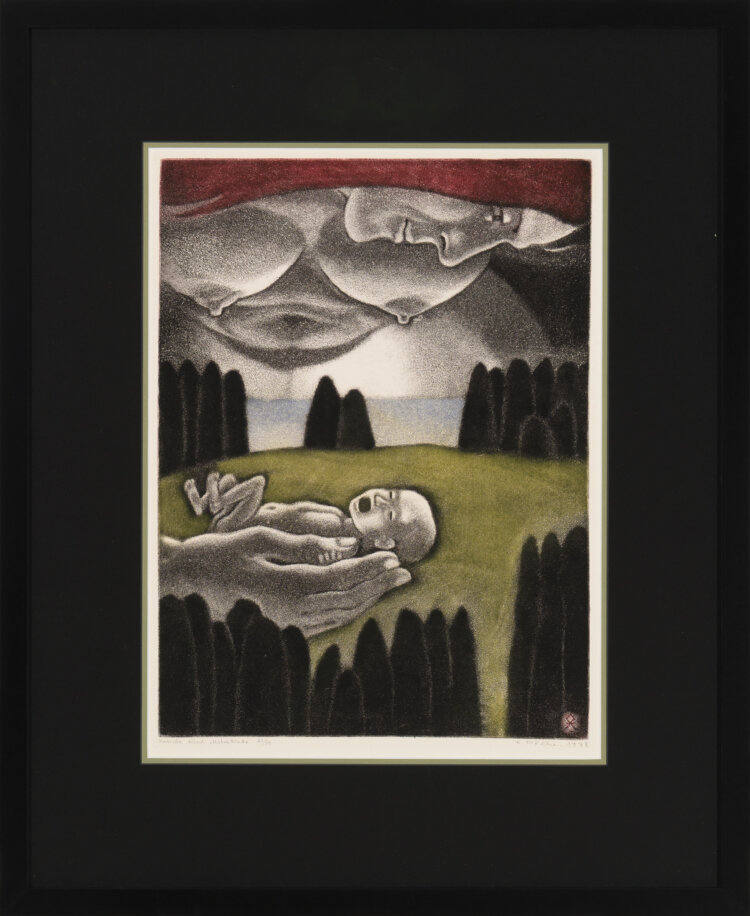
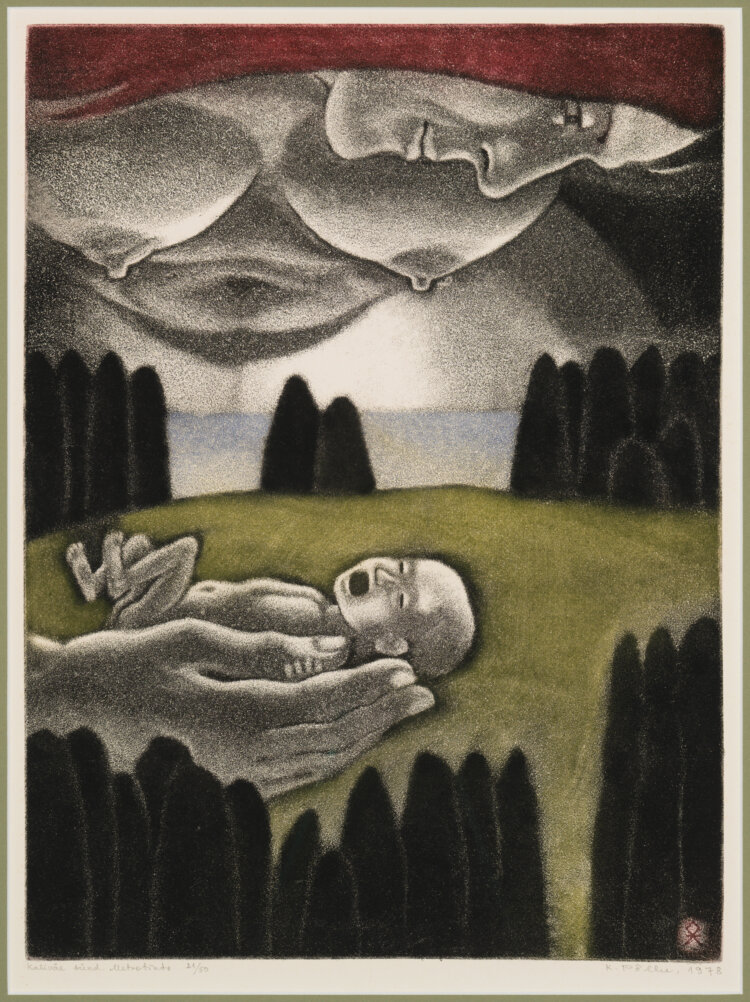
Kaljo Põllu “Kaliväe sünd”
Sügisoksjon 2025
Mezzotint on paper. 1978.
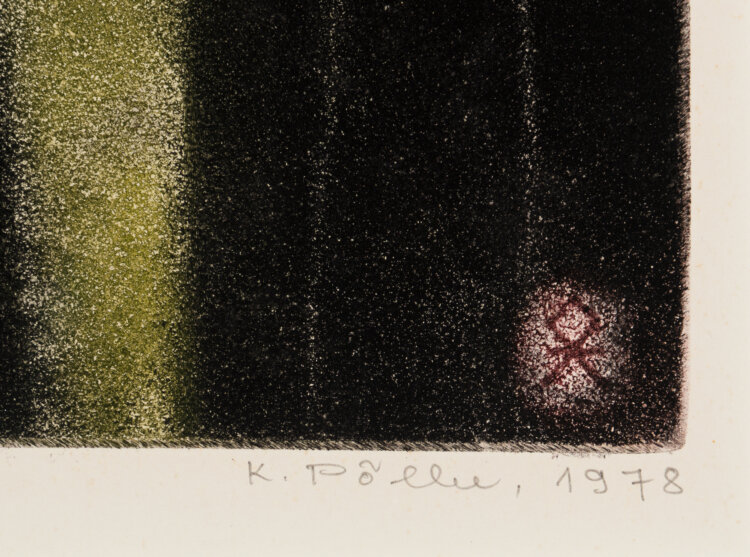
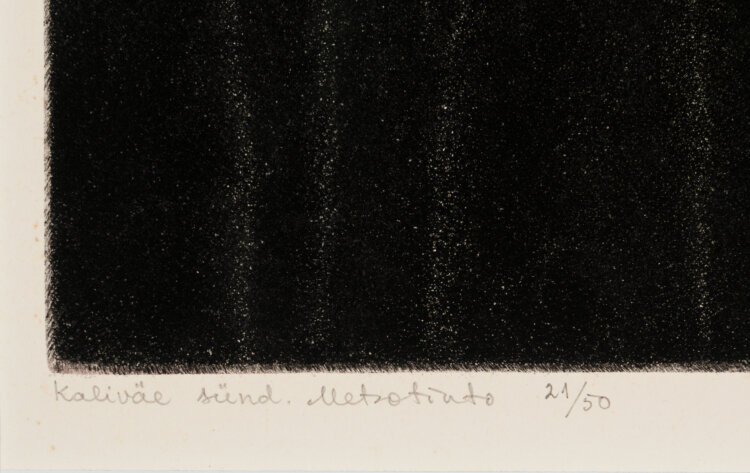
Signature: Kaliväe sünd. Metsotinto 21/50 / K. Põllu, 1978
| Measurements | plm 49,8 x 37 cm |
|---|---|
| Starting price | 3 800 € |
| Number of bids | 11 |
| Hammer price | 6 000 € |
“Along with a person, his loneliness and solitude are born but also a duality. The blood bond is broken and the person cries — this crying means loneliness. But eye contact is established and the person smiles — this smile means not being alone. It means being a tiny creature accompanied by a big creature, with a big face.” —Jaan Kaplinski
In the period between 1978 and 1984, Kaljo Põllu completed a powerful series of 65 mezzotint prints collectively titled “Kalivägi”. Of these, 25 selected works were published in a printed album by the publishing house “Kunst” in 1985, with a philosophical commentary by Jaan Kaplinski on the back of each page.
Linguist Paul Ariste has written that the North Estonian dialect word “kalivägi” appeared in print in the 17th century in connection with the biblical giant Goliath. The word “kali” meant a strong wooden bar or lever from which the name “Kalev” probably also came, meaning a big, strong man. The Estonian epic “Kalevipoeg” is a derivative of it as is the Finnish “Kalevala”, which means the habitat of the Kalevites. Kalivägi itself denotes the Kalevites people (“vägi” is also military), and so Põllu’s graphic series is a kind of pictorial epic that observes the formation of our people’s indigenous values and the growth of culture from mythological beliefs.
“The Birth of Kalivägi” is also part of the collection of the Art Museum of Estonia.
Text: Vappu Thurlow