Eesti kunsti oksjonid
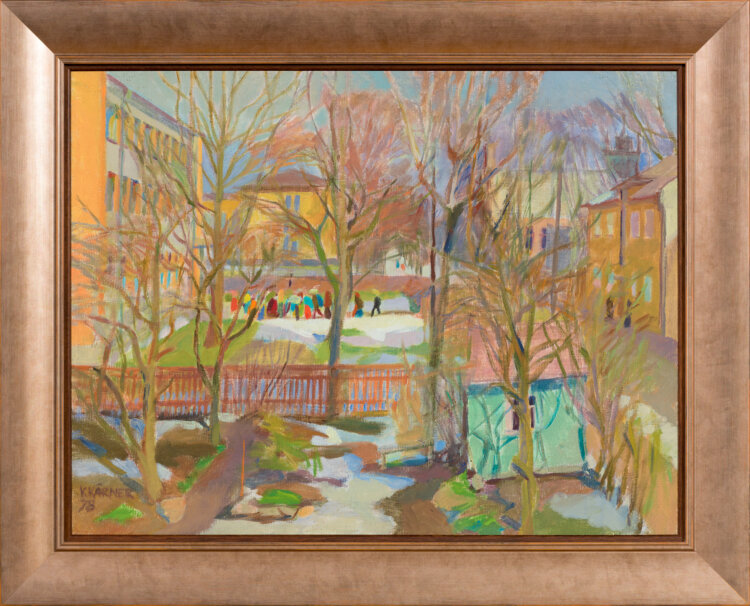
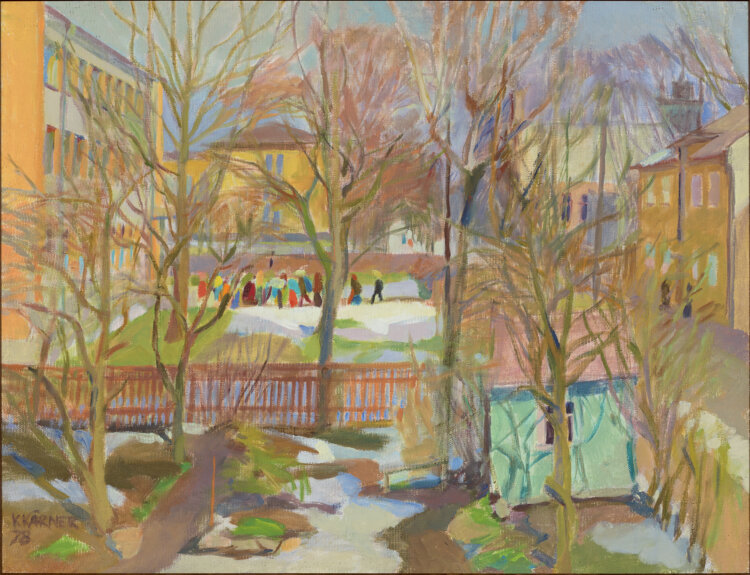
Kaja Kärner “Aprillilumi”
Sügisoksjon 2024
Oil on canvas. 1978.
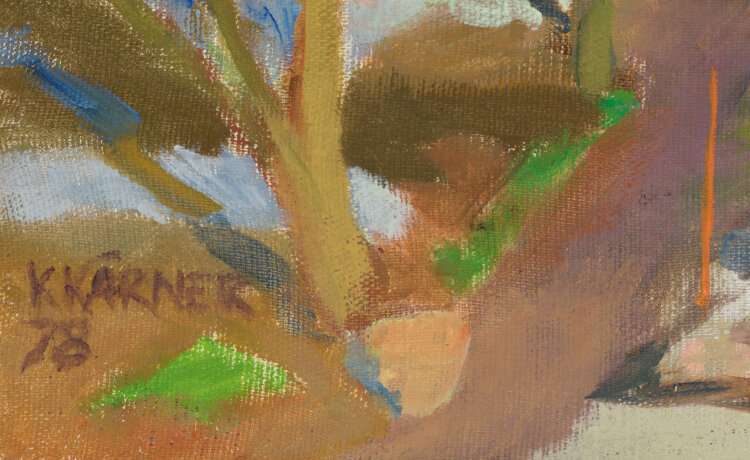
Signature: K. KÄRNER 78 / APRILLILUMI
| Measurements | 50 x 65 cm |
|---|---|
| Starting price | 4 000 € |
| Number of bids | 2 |
| Hammer price | 4 200 € |
The work of Kaja Kärner, one of the most important members of the Tartu avant-garde movement of the 1950s and 1960s, has attracted increasing attention in recent years. Her paintings have participated in international exhibitions (most recently in 2024 at the MO Museum in Vilnius) as well as in Estonia.
On October 25 of this year, a solo exhibition dedicated to the artist called “Kaja Kärner. Friendship and Time” opened at the Adamson Eric branch of the Art Museum of Estonia, the accompanying text of which reads: “Kaja Kärner (1920-1998) was one of the central members of the legendary Tartu Friends, Estonia’s first post-war unofficial art group. She was one of the first in Estonian art history to create abstract compositions and collages with a good sense of rhythm and color, and her landscape paintings are some of the most memorable in this genre. With her laconic formal language, the artist captures the tone of the era well and her finely colored works, which are not devoid of irony that walks on the edge, offer a good insight into the everyday life of that time.” (source: https://kunstimuuseum.ekm.ee/syndmus/kaja-karner-soprus-ja-aeg/)
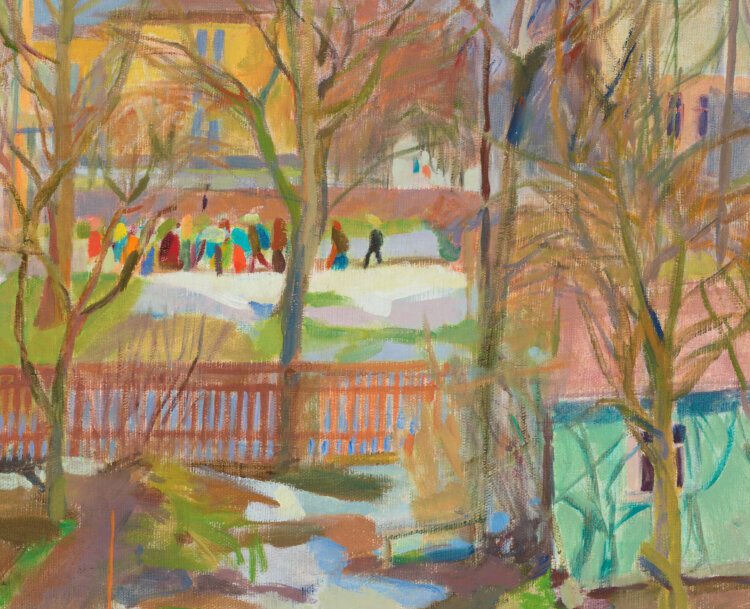
Through the decades, the artist also continued the Palladian line, which is well-expressed in this view of Tartu. The April city view from Salme Street in Karlova is a good example of such a late-impressionist approach and a motif that the artists of the university city were happy to capture.
The motif of old houses on the right is joined on the left by newer architecture – a schoolhouse consecrated as a commercial school in the 1940s, which later housed the University of Tartu Teachers’ Seminary and today is the Tartu Karlova School. However, Kärner’s main attention is still drawn to the moment itself, its coloristic values and the capture of the sunny mood of early spring, which takes the viewer straight back to 1978.
Text: Harry Liivrand, Katre Palm