
Eesti kunsti oksjonid
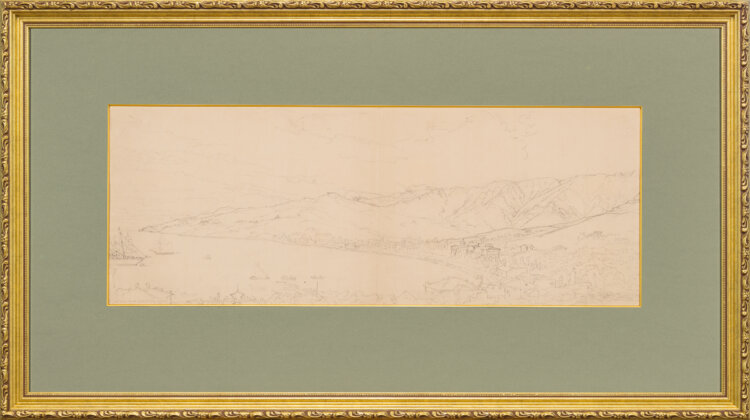
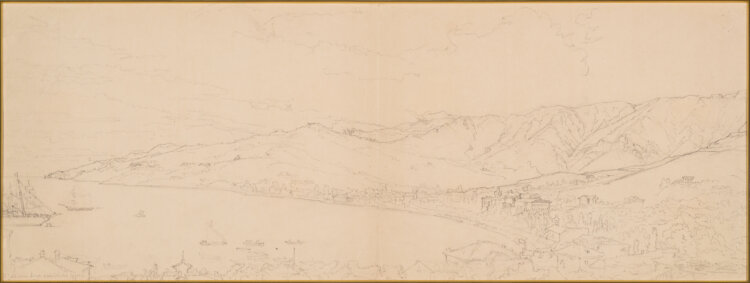
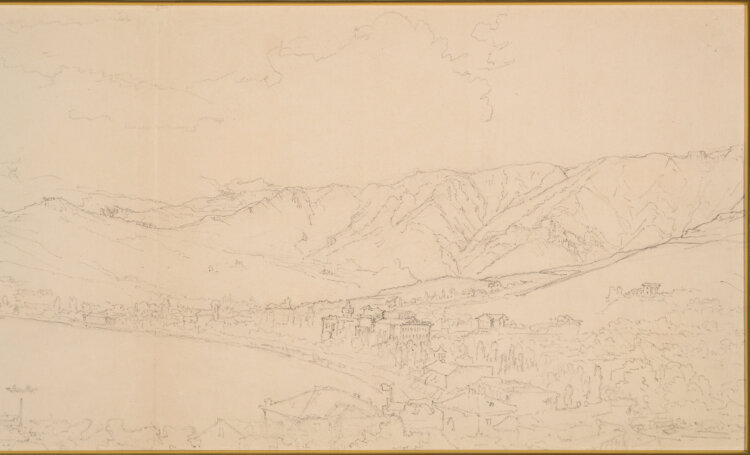
Johann Köler “Musta mere rannikul”
Sügisoksjon 2024
Italian pencil on paper. 1872-1880.
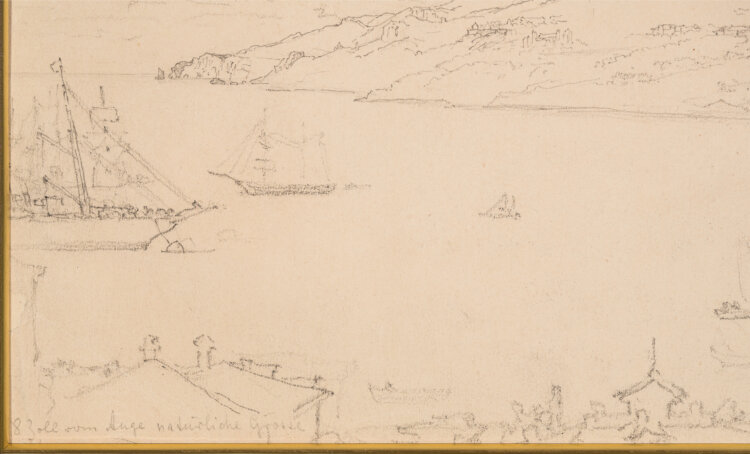
Signature: 8 3oll vom Auge natürliche Grösse
| Measurements | Km 26 x 70,5 cm |
|---|---|
| Starting price | 5 800 € |
| Number of bids | 1 |
| Hammer price | 5 800 € |
In 1872, Johann Köler (1826-1899) first traveled to Crimea to visit his friend, the philosopher and naturalist Nikolai Danilevski who had acquired the Mshatka estate on the southern coast of Crimea. In 1873, he traveled again to Yalta, this time to paint a portrait of Alexander II at the Livadia Palace.
From then on, he visited Crimea often, especially in the wintertime. The main part of the landscape and still-life paintings (“Eves”) and drawings related to Crimea date from the 1870s and early 1880s, which is where the present pencil drawing can also be placed in terms of time. The epic view that opens up before us most likely depicts the coast of Yalta on the Black Sea. This is confirmed by the outlines of the mountains surrounding the city, which closely correspond to this line.
The drawing comes to auction from the collection of architect Maximilian Messmacher (1842, St. Petersburg – 1906, Dresden) who, among other things, designed the building of Baron AL von Stieglitz’s Central Institute of Technical Drawing. He was also the architect of St. Isaac’s Cathedral from 1877 to 1888, with which Köler was also associated due to his mosaics.
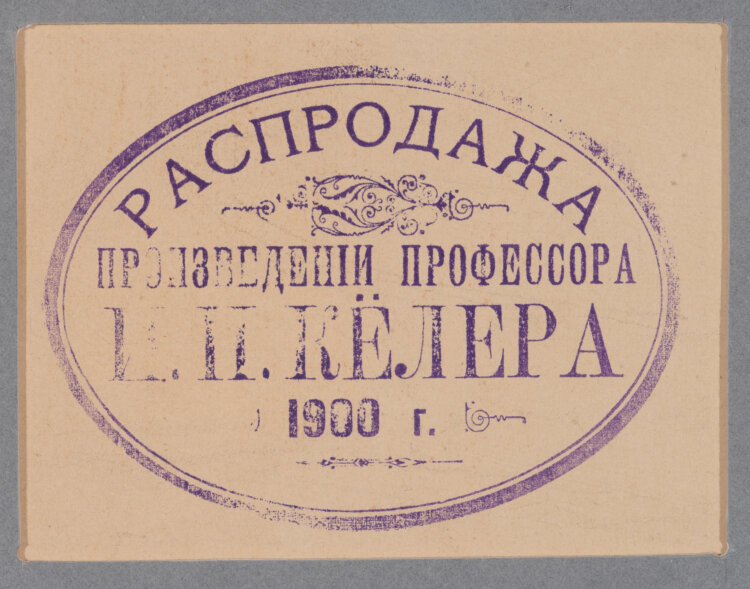
Both men were academicians and professors of the St. Petersburg Academy of Arts and undoubtedly knew each other. It is therefore not surprising that Messmacher bought some of Köler’s works at the auction, which was organized after the latter’s commemorative exhibition in the Raffael Hall of the Academy of Arts in 1900. The German note on the piece appears to be Köler’s autograph; this most likely resulted from his better command of German than Russian as he communicated a lot with Germans both abroad and in St. Petersburg.
Text: Mai Levin