
Eesti kunsti oksjonid
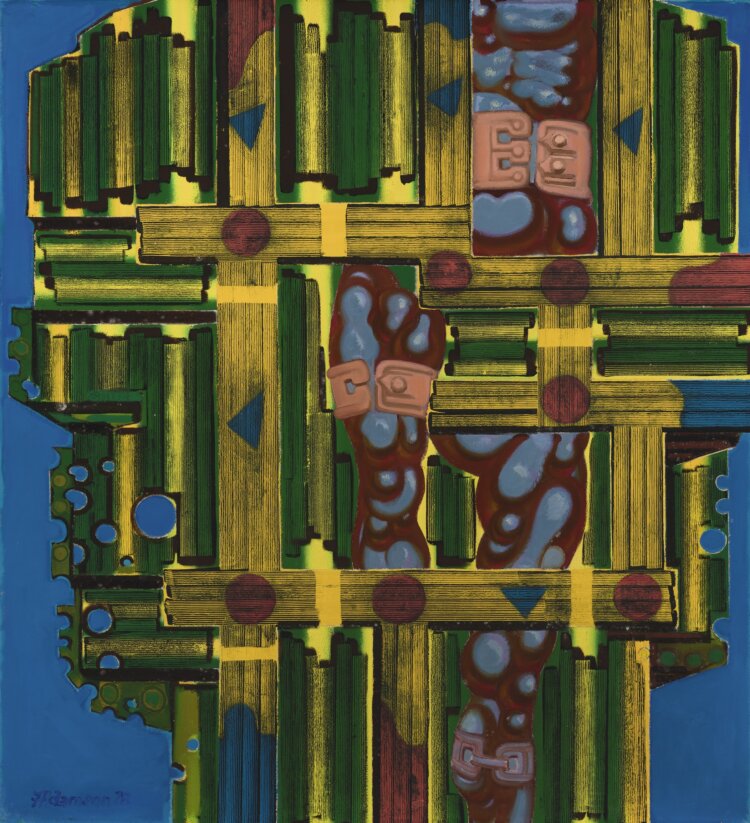
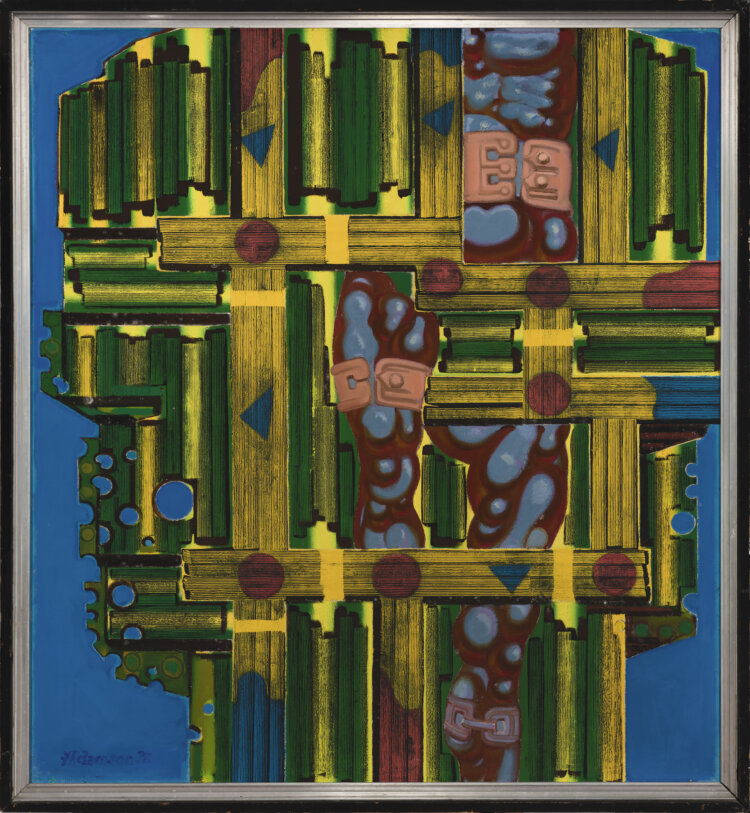
Jaak Adamson “Raskesti läbitav maastik VII”
Kevadoksjon 2025
Oil on plywood. 1978.
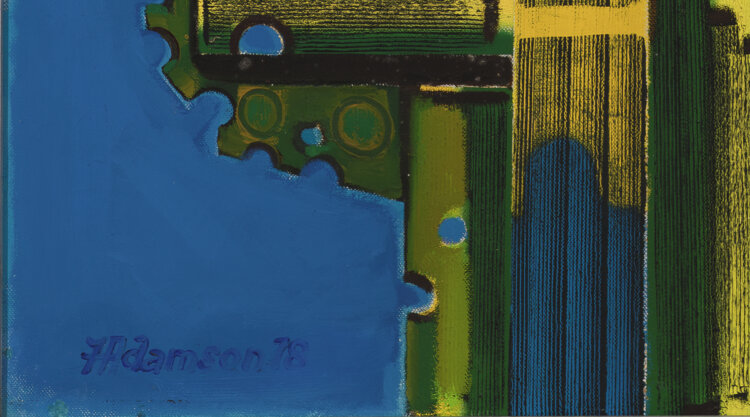
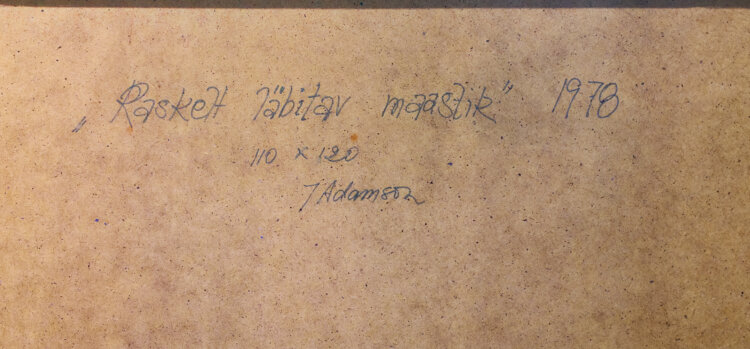
Signature: J Adamson 78 / “Raskelt läbitav maastik” 110×120 J Adamson
| Measurements | 110 x 120 cm |
|---|---|
| Starting price | 6 500 € |
| Number of bids | 25 |
| Hammer price | 15 600 € |
One of the great talents of Estonian painting in the 1970s and 1980s was Jaak Adamson (1938-2022). As a modernist, he quickly found his own unique figurative system, which reflects both Fernand Léger’s machine aesthetics and the figurative world of pop art, but in a unique stylized form.
In 1979, Adamson held a solo exhibition entitled “Difficult Landscape” at the Tallinn Art Gallery, where out of a total of 15 exhibited paintings, the artist chose this painting as the cover image of the exhibition ( https://www.digar.ee/viewer/et/nlib-digar:419611/357889/page/1 ). According to the catalogue, there were a total of seven pieces in the exhibition’s title series (all from 1978-1979) but in addition to being chosen as the cover image, this was the only one that Adamson put in a powerful metal frame, to emphasize the importance of the work as a culmination of the series. For a design from the same series, Adamson also received the Painting of the Year Award in 1978 (together with Malle Leis, Tiit Pääsuke and Olav Maran).
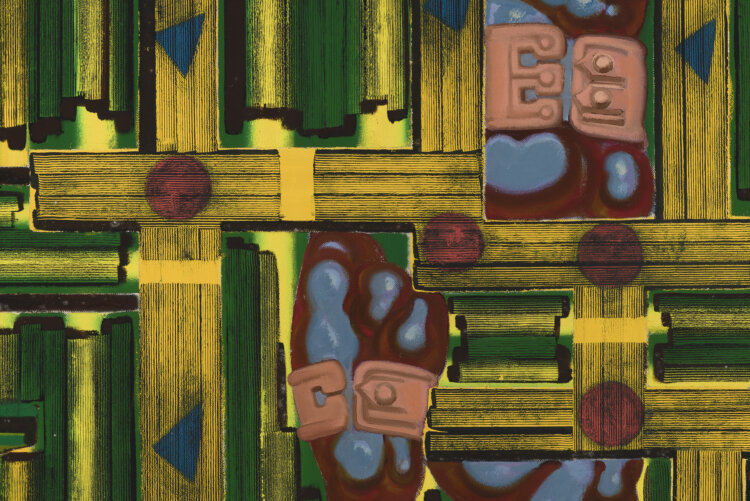
In the painting, which follows a stylistic style unique to Adamson, a complex labyrinth of pistons and culverts holds organic plastic forms. However, the human dimension is always present in Adamson’s works, either as a fragment or as a whole, adding a humanistic subtext to his canvases – in this case through the legs.
This kind of maze thus acquires a philosophical-allegorical meaning of a person’s life. It is full of obstacles but, if wisely traversed, it is possible to find the path to happiness – just as he found it in Slovakia, where he moved to live a year after the exhibition. However, he left the painting to his relatives who remained in Estonia, who have carefully preserved the historical piece for decades.
Text: Katre Palm, Harry Liivrand