
Eesti kunsti oksjonid
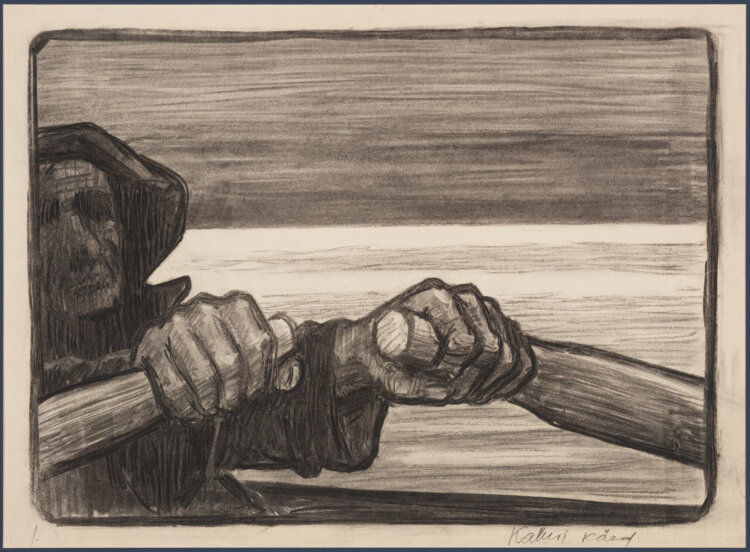
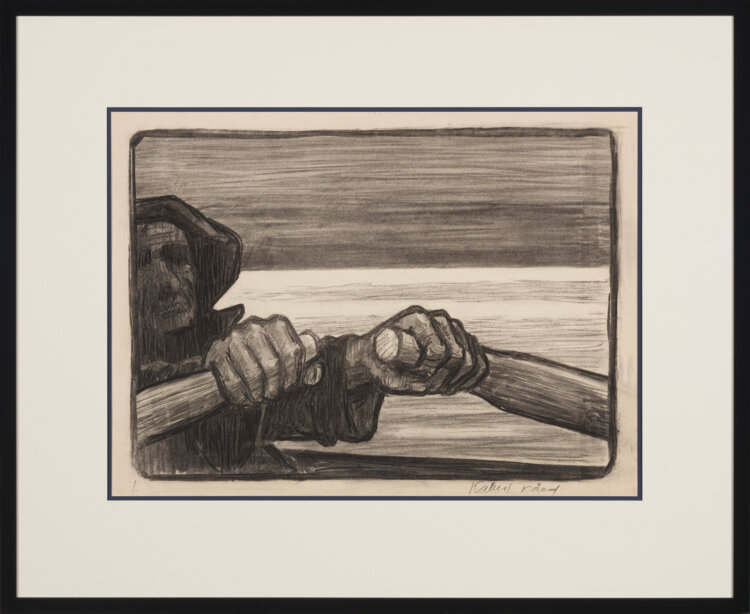
Ilmar Torn “Kaluri käed”
Sügisoksjon 2024
Charcoal on paper. 1957.
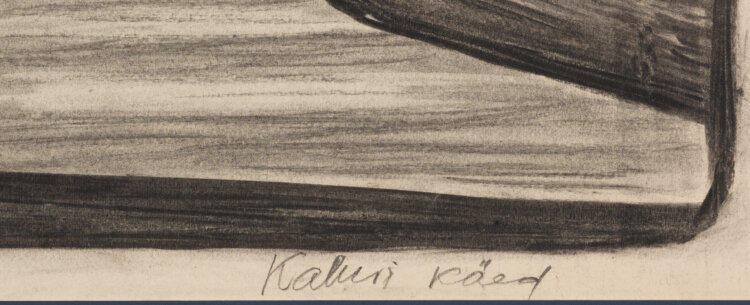
Signature: Kaluri käed
| Measurements | Km 47 x 65 cm |
|---|---|
| Starting price | 1 800 € |
| Number of bids | 16 |
| Hammer price | 4 800 € |
Ilmar Torn (1921-1999) has emphasized in his articles how important it is for an artist to base his creation on his own personality – the art expressed through this is the most honest kind possible. Originally from Kuressaare, Torn followed this principle throughout his creative path and dedicated a large part of his creation to his home island of Saaremaa and fishing culture more broadly.
With a print run of only 20 prints, “Fisherman’s hands” is one of the signature pieces of Estonian graphic art, which made the artist instantly known as a star in 1958. Originally, it was intended to be the first piece in the series “Baltic Sea 1930” which also included “Lords of the Baltic” but both prints became stars in their own right after their first exhibitions.
In interviews, Torn admitted even years later: “Strangely enough, this first large-format graphic page of mine paved the way for me into the so-called great Estonian art and has remained a landmark for both me and the history of Estonian graphic art, which has so far withstood the test of time and has also been a sign of the arrival of a new stage in Estonian graphic art.” (quoted from Ilmar Torn’s 2021 memorial exhibition in Kuressaare).
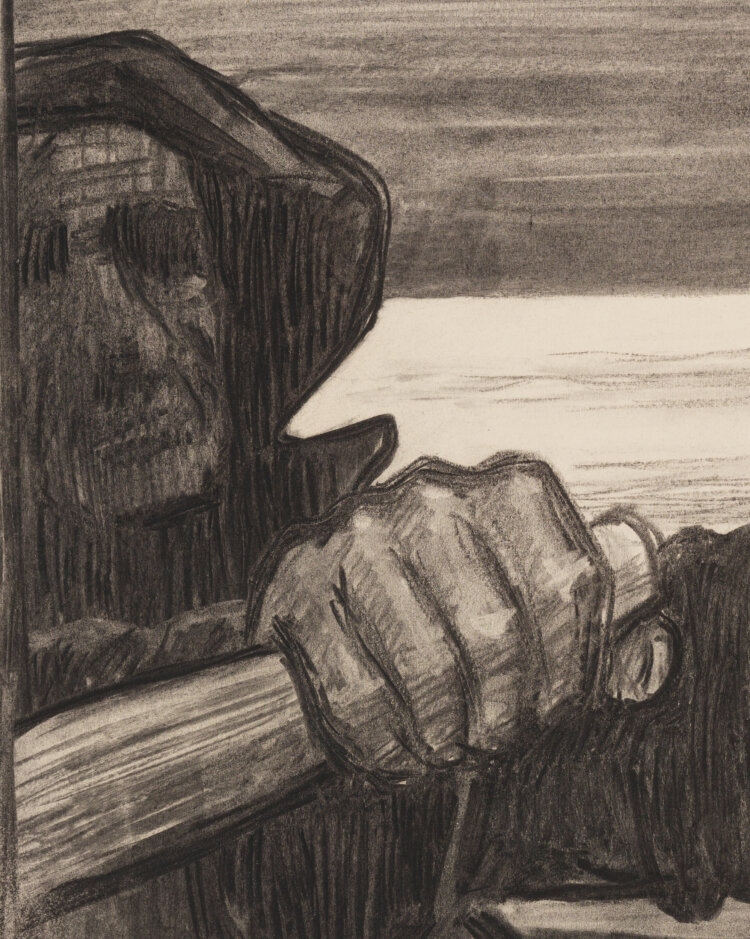
In the catalogue accompanying Torn’s solo exhibition at the Tartu Art Museum in 1974, Tuui Koort writes: “This large graphic sheet is like a symbol of the connection between nature and man, executed with strong inner tension. The contrast of large black and white surfaces helps to emphasize the masculinity. The diagonal composition has been solved ingeniously: the boat seems to be absent and the fisherman’s head is only half visible, cut off by the edge of the sheet and thus, the powerful hands holding the oar stand out especially against the tone of the sea and sky.” (“Ilmar Torn”, TKM, 1974, p. 5).
These same powerful hands belong to the artist himself. He drew them for this composition using a mirror over and over again until he reached perfection. And in the case of this design, the artist’s touch is literally tangible because before us is a unique copy of an iconic work: an original drawing that began a new phase in Estonian graphic art!
A valuable charcoal drawing, carefully and lovingly preserved by the artist’s daughters, will be auctioned directly from the Ilmar Torn estate.
Text: Katre Palm