
Eesti kunsti oksjonid
Erich Leps “Pärnu”
Sügisoksjon 2024
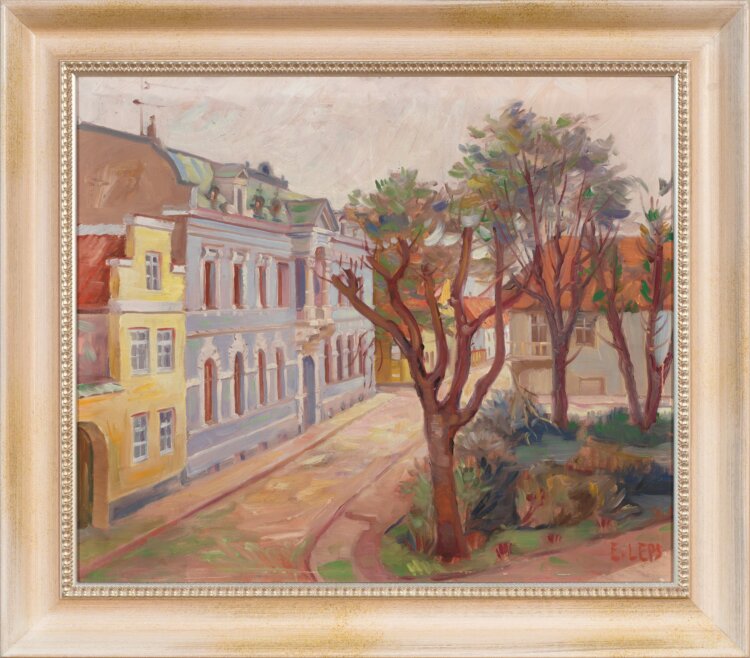
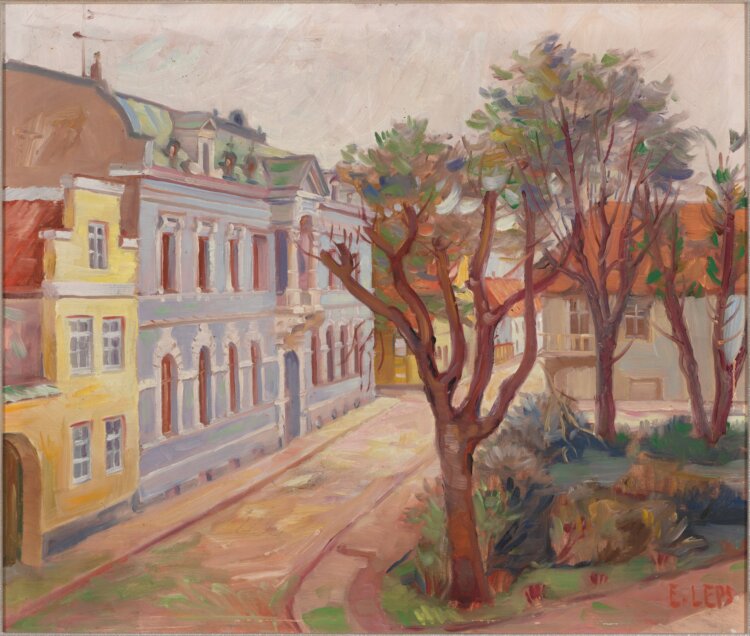
Oil on plywood. Late 1930s.
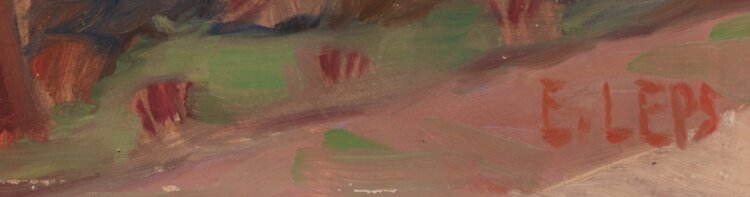
Signature: E. LEPS
| Measurements | 47,5 x 56 cm |
|---|---|
| Starting price | 3 800 € |
| Number of bids | 4 |
| Hammer price | 4 400 € |
For Erich Leps (1901-1965), who graduated from Pallas in 1931 as a student of Nikolai Triik, the school meant much more than a place to learn art – it was there that he met his future wife Pauline Leps-Estam with whom he settled in Pärnu, his birthplace, in the second half of the 1930s.
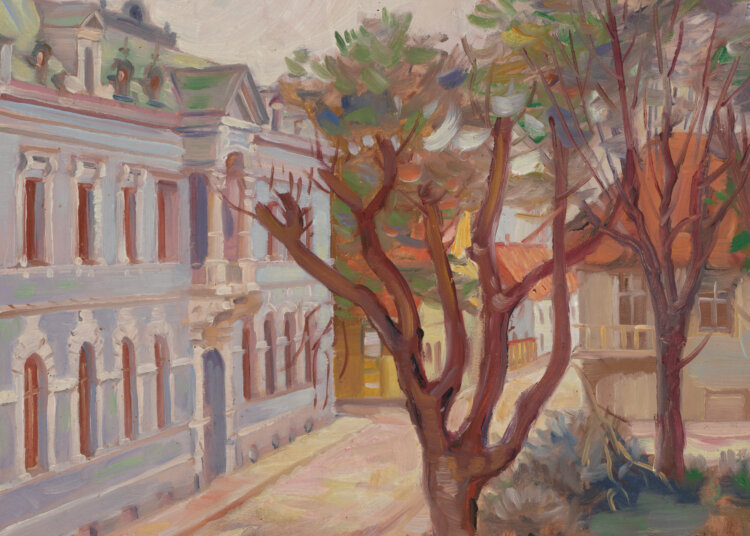
As an artist, Leps was a representative of the realism that followed neo-realism, which was widespread in the late 1920s and early 1930s, and stood out primarily for his compositions. Later, while living abroad, he painted mainly landscapes and portraits. This view of Rüütli Street is a rare addition to Leps’ Estonian-era creative heritage as very few of his views of Pärnu have survived – some of his earlier work was destroyed in the Pärnu Museum fire of 1944.
The pastel tones of the painting convey the hedonistic values of his then-hometown and express his love for the city’s diverse architecture. Leps masterfully conveys a soft light, which carries darker shades in the park’s mighty trees and lighter shades on the facades of the houses. The neo-Renaissance house on the left at Rüütli 19 bears a similar shade of water-grey, enlivened with white details, to this day and is under heritage protection.
Built at the beginning of the 19th century by postmaster Otto von Weissman on the corner of Vee and Rüütli, the house was originally a single-story building. Later, a second floor was added, to which the city architect of the time added a central chrysalis loggia and a balcony. Thus, the house became one of Pärnu’s representative buildings where a bank was opened at the beginning of the 20th century. However, during the Republic, it became a courthouse and has the same function to this day.
Text: Mai Levin, Katre Palm