
Eesti kunsti oksjonid
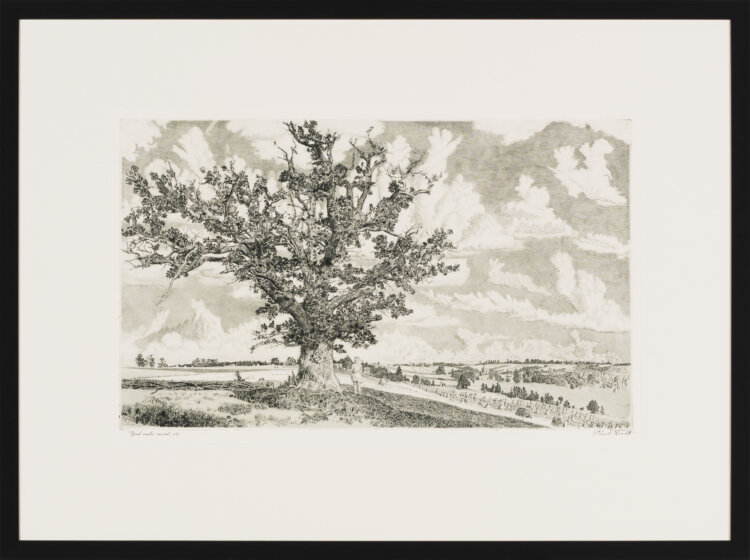
Eduard Wiiralt “Viljandi maastik”
Sügisoksjon 2024
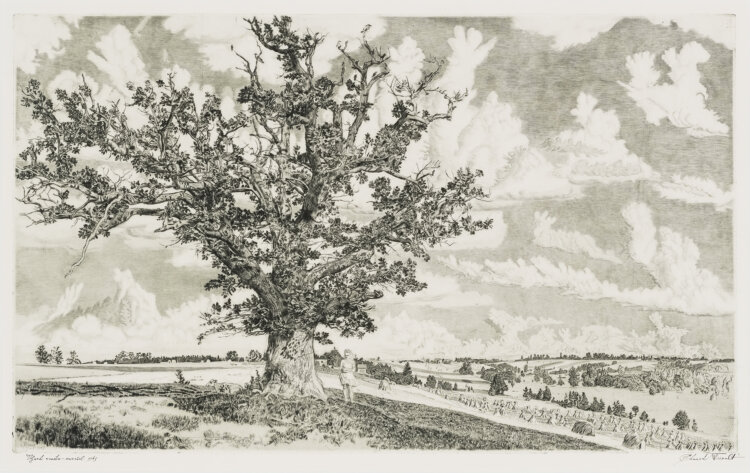
Drypoint on paper. 1943.
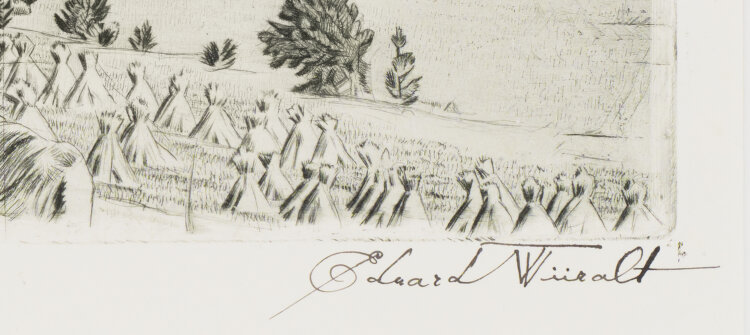
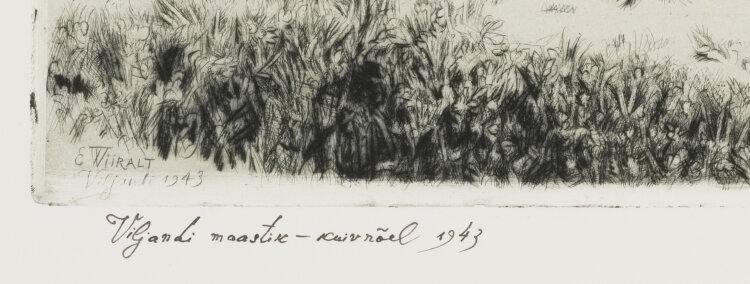
Signature: E. WIIRALT Viljandi 1943 / Viljandi maastik – kuivnõel 1943 / Eduard Wiiralt
| Measurements | Plm 39,2 x 64 cm |
|---|---|
| Starting price | 9 000 € |
| Number of bids | 1 |
| Hammer price | 9 000 € |
One of Eduard Wiiralt’s (1898-1954) most iconic images of Estonia, “Viljandi landscape”, was created in the summer of 1943 when the artist was in Viljandi County. Wiiralt had noticed this mighty tree, which later became known as the “Wiiralt Oak” and was protected as a nature reserve in 1959, for a long time, but on August 7, 1943, he finally began engraving it.
This spacious monumental panorama tells the viewer about the artist’s affection for his homeland and its almighty nature and it also depicts Wiiralt’s farewell to Estonia, as hostilities were getting closer and closer and the rumble of the bombing of Tallinn could be heard even in Viljandi County.
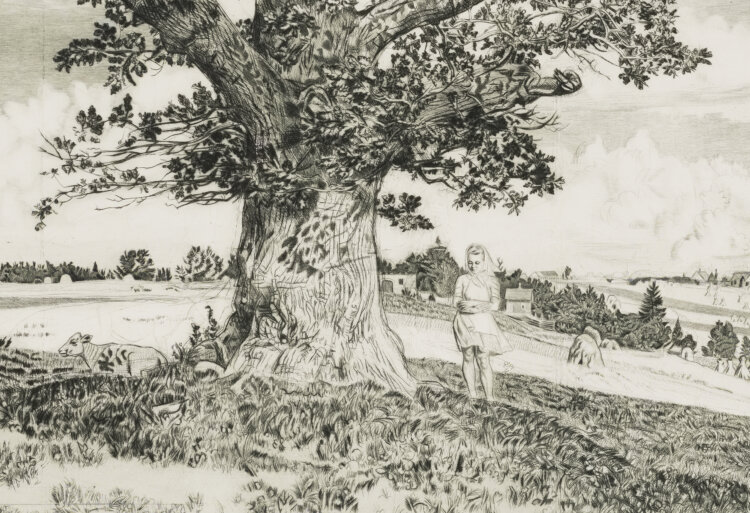
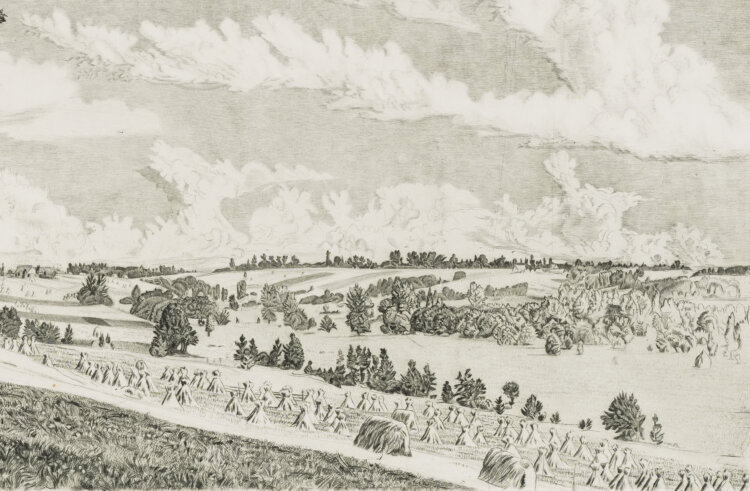
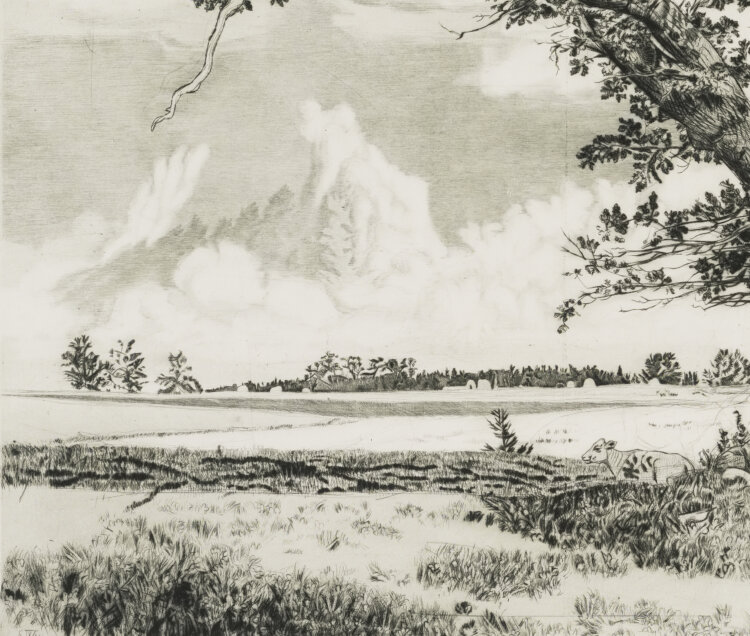
Wiiralt paid attention to every detail in this design, so he made separate ones for the foamy clouds, the girl under the tree, and the landscape in the background. Nature had its way with the latter and a fierce storm on August 13th destroyed all the crops but blessed the following days with ideal sunny weather.
So, after the landscape, Wiiralt was able to continue finishing the girl for which Maiu Kulisson, a hostess at Tamme Farm, posed. Wiiralt later made another very successful and meaningful print of Virve, another girl who had visited the same farm whose deep and sincere eyes inspired him.
The idyllic and at the same time dramatically restless “Viljandi landscape” is a great symbol of the mood that prevailed in Estonia at the time and has forever written the Tamme-Koori oak into the history of Estonian culture.
Text: Mai Levin, Katre Palm