
Eesti kunsti oksjonid
Eduard Wiiralt “Põrgu”
Kevadoksjon 2025
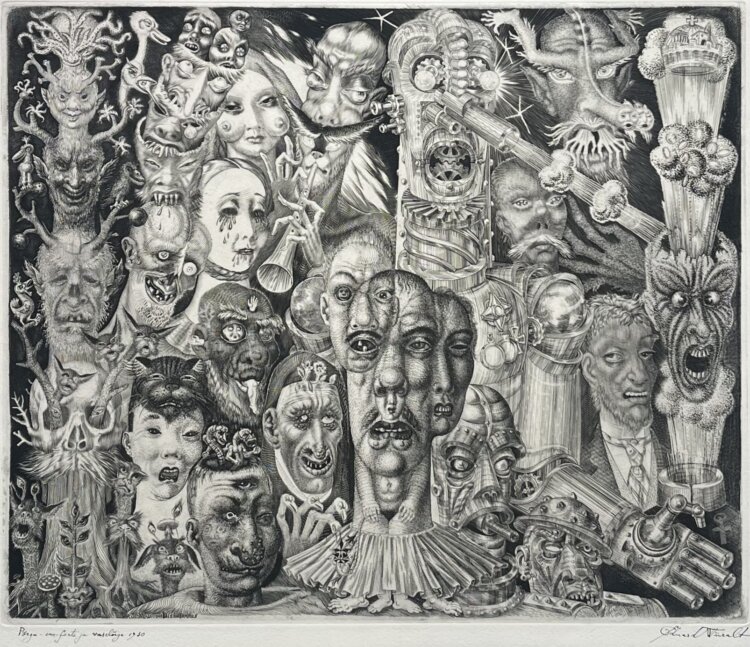
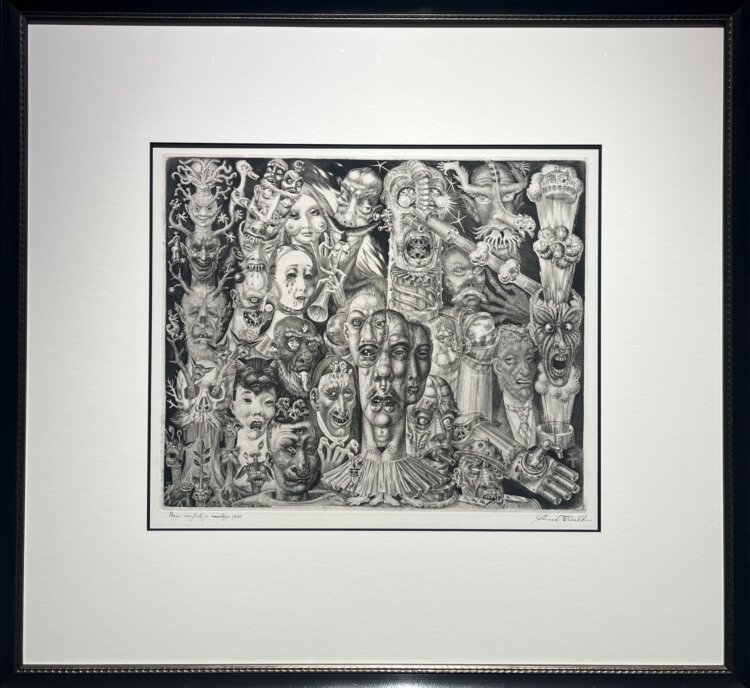
Etching, copper engraving on paper. 1930
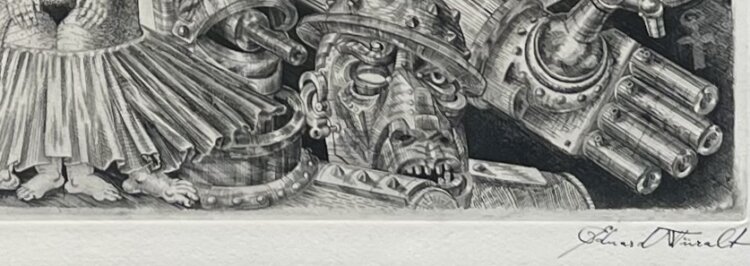
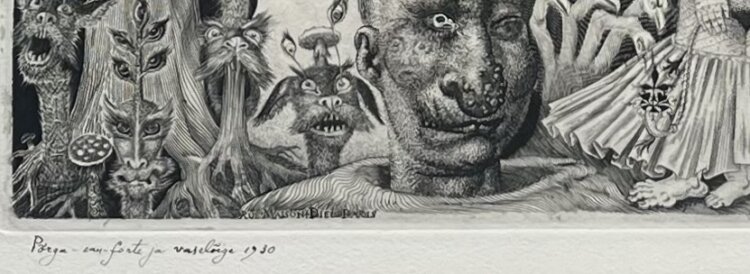
Signature: 1930 RUE MAISON DIEU PARIS / Põrgu – eau-forte ja vaselõige 1930 / Eduard Wiiralt
| Measurements | Plm 39,1 x 46,7 cm |
|---|---|
| Starting price | 48 000 € |
| Number of bids | 1 |
| Hammer price | 48 000 € |
Eduard Wiiralt’s (1898-1954) “Inferno” was selected as one of the 12 most influential pieces in Estonian art history ((https://www.europeana.eu/et/galleries/8964-masterpieces-of-estonian-art) and has no equal in the field of graphic art. Wiiralt began preparing this iconic copper engraving, completed in 1932, in 1930. It was partly inspired by the then-spreading surrealism, and partly by the fantasy whipped up by the artist’s lifestyle but at the same time, this fantastic design is an allegory of a person and a society given over to a passion for destruction and other vices.
The social meaning of “Inferno” is easier to understand by its companion piece “Cabaret” (originally titled “Dance of Life”), which presents an image of an unbridled orgy, the quintessential human thirst for pleasure, which buries any spiritual aspirations. In the case of “Inferno,” which talks about its aftermath, Wiiralt has admitted that the print contains many symbols and images from his own subconscious, which grew out of hallucinations caused by partying in Montparnasse.
A machine-man shooting from a cannon-like nose, a head spewing fire and cat people – nothing in this twisting, bubbling world refers to real life. Thus, the artist’s deeply personal and expressive style, which has found its brightest expression in the piece that is now considered to be Wiiralt’s masterpiece, finds its most vivid expression.
This print has been inspected by Estonia’s best graphic arts experts and assessed as being very well-preserved and in good condition.
Text: Mai Levin, Katre Palm