
Eesti kunsti oksjonid
Aarne Miikmaa “Võrumaa motiiv”
Sügisoksjon 2024
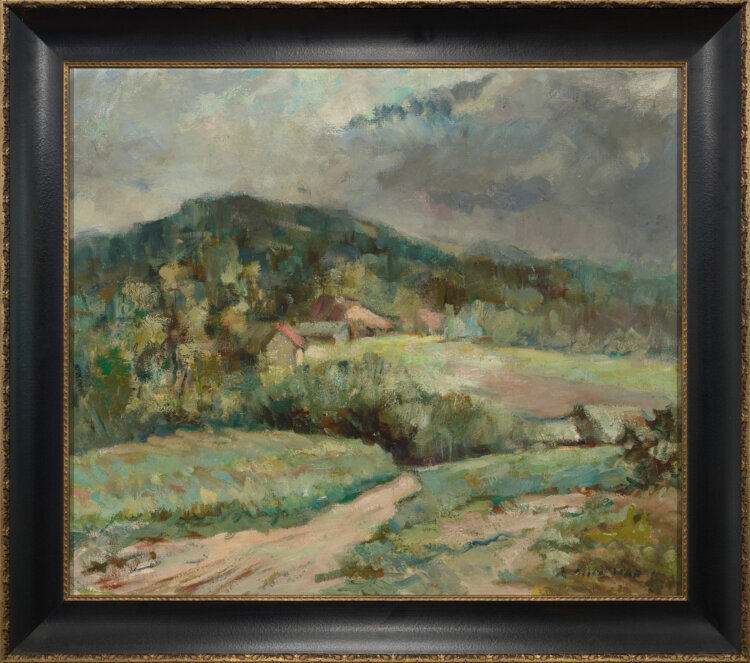
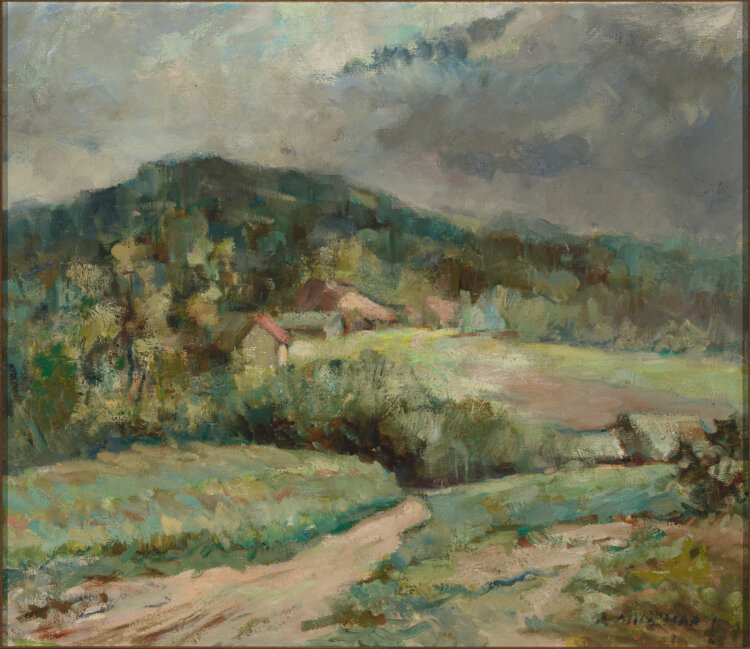
Oil on canvas. 1941.
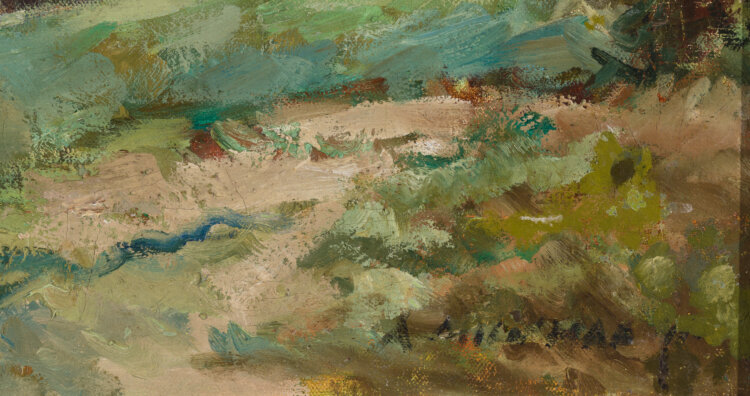
Signature: A. MIIKMAA / A. MIIKMAA “Võrumaa motiiv“
| Measurements | 61 x 70,5 cm |
|---|---|
| Starting price | 25 000 € |
| Number of bids | 49 |
| Hammer price | 58 000 € |
The works of the talented but young Aarne Miikmaa (until 1939 Harald Oskar Miikman, 1908-1942) have barely survived due to his short creative career, and those that do exist are mainly portraits. The boy from Kärdla began studying at Ants Laikmaa’s studio school at the age of 14 where the master personally took him under his wing, supported him and enabled him to graduate from Tallinn Boys’ Gymnasium.
In 1931-34, Miikmaa studied philosophy and art history at the University of Tartu and during his studies, also began studying painting at Pallas, which he graduated from as a student of Ado Vabbe in 1938. Miikmaa loved soft and blurred transitions of light and shade, rather gently muted colors, which give his works a romantic tone and for this reason, in addition to Hoffmann, he has also been called the Estonian Rembrandt.
“Võrumaa motif” depicts a powerful natural experience that was presented at the 1941 Tallinn Art Hall spring exhibit. It was purchased immediately after the exhibition for a private collection and has been housed there to this day. This painting is very likely identical to the painting “Võrumaa landscape with a mountain column” (1941, oil, canvas, 58.5 X 70.5; catalogue number no. 95) recorded in the catalogue of the Aarne Miikmaa exhibition organized at the Tartu Art Museum in 1969.
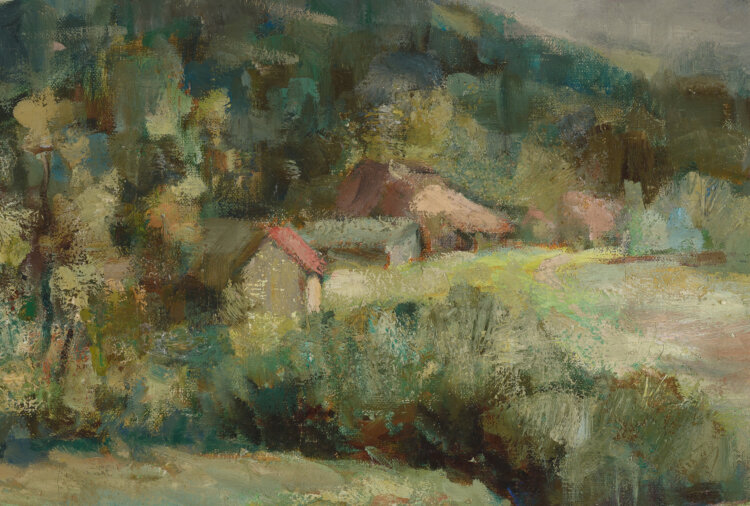
Miikmaa has masterfully transferred the gloomy nature of pastel to oil painting here – a quality that allowed the artist to subtly convey the curves and fluidity of the Võru County landscape. Even the houses on the slope form a harmonious part of the surroundings, almost merging with the forest in the distance. With a rain cloud approaching from the right, he emphasizes the supremacy of nature and conveys a genuine experience where we notice the change in light.
On the left side of the painting, the landscape is still bathed in a bright glow while on the right, a threatening shadow falls over the land. Since the artist fell ill with tuberculosis in the summer of 1941, from which he died in the first days of 1942, the soft-formed landscapes of South Estonia completed in the preceding spring and summer, including this one, remained the last works of the talented artist.
Text: Mai Levin, Katre Palm