
Eesti kunsti oksjonid
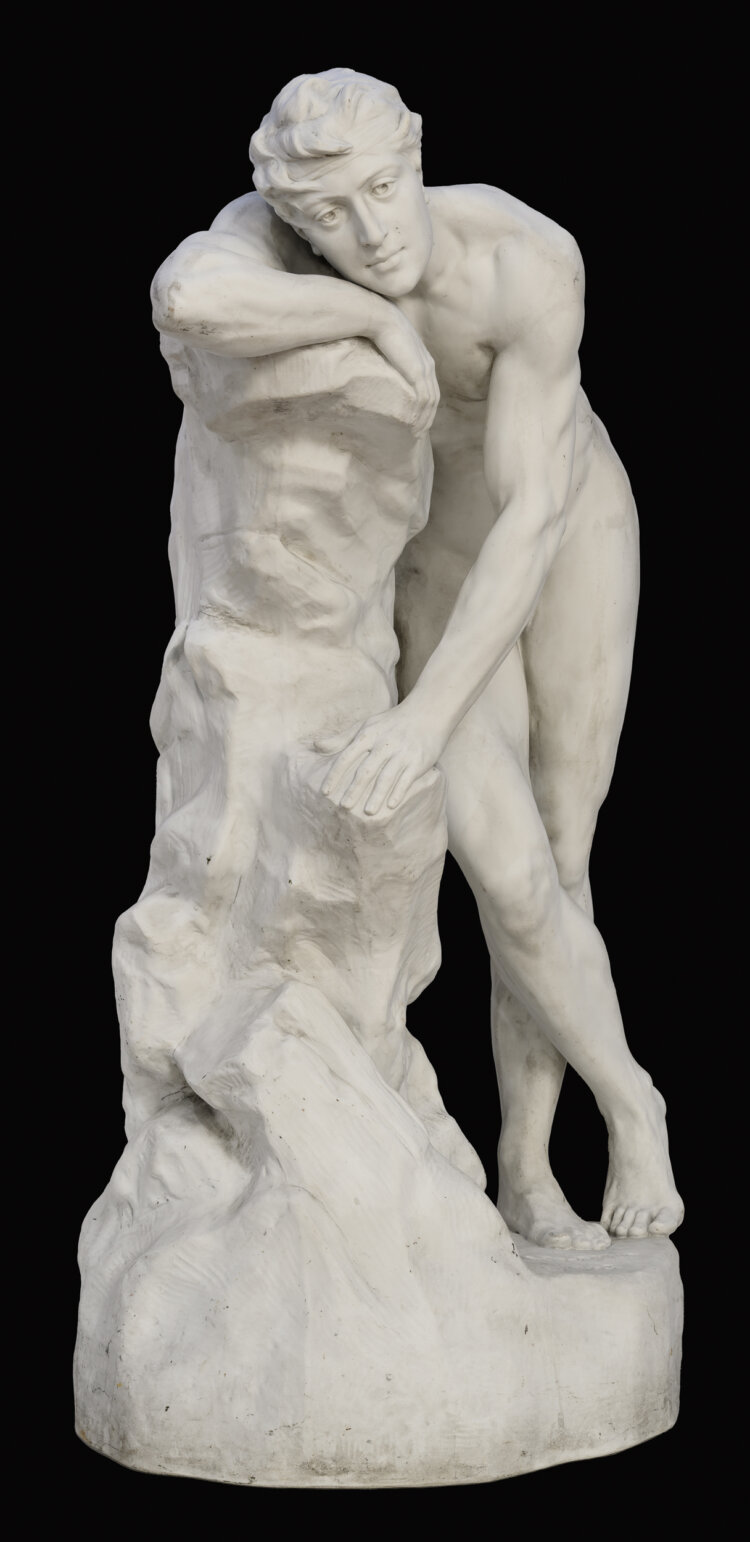
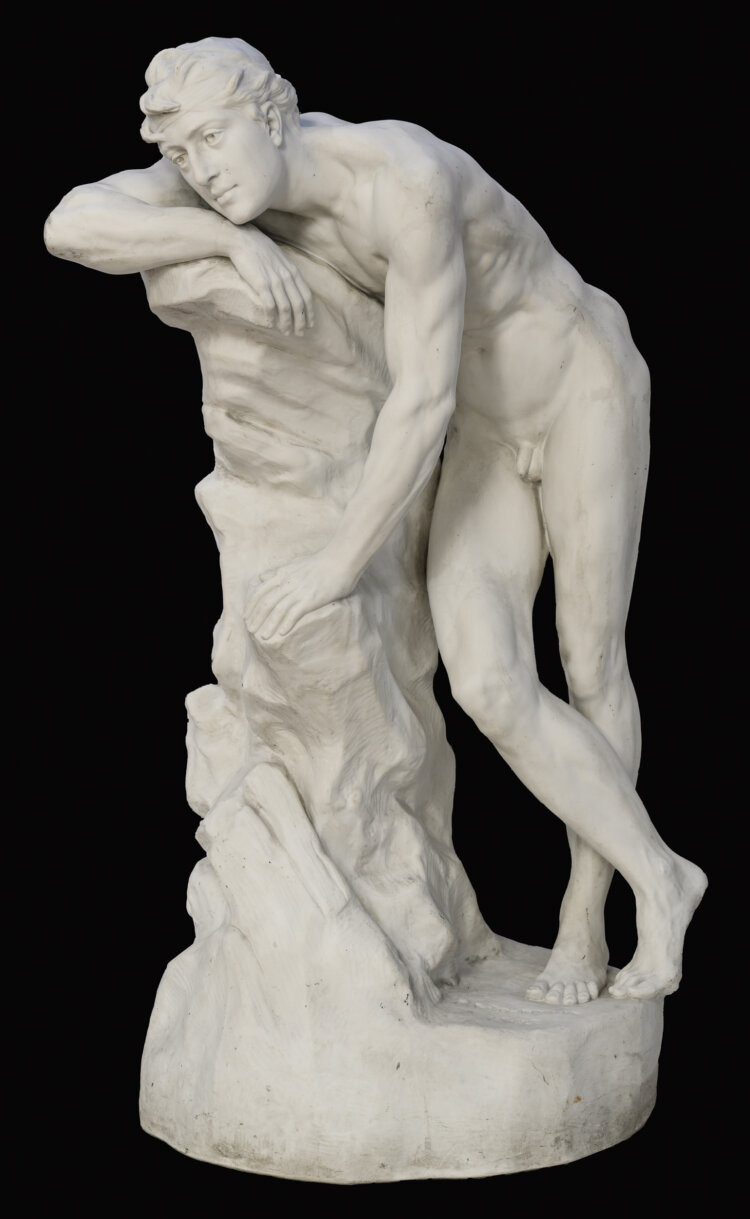
Amandus Adamson “Damon”
Kevadoksjon 2025
Biscuit. 1905.
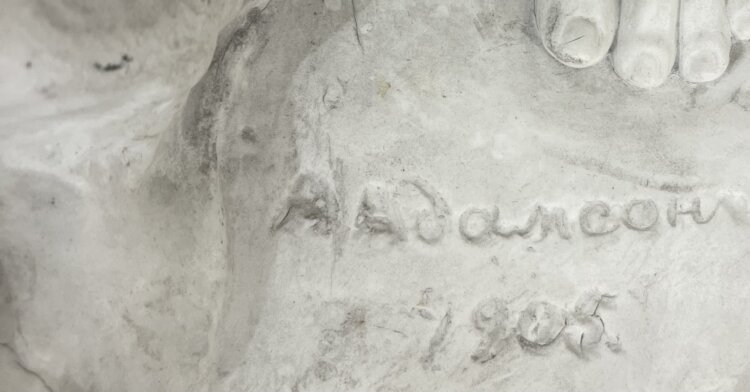
Signature on the base.
| Measurements | 77 x 55 x 32 cm |
|---|---|
| Starting price | 66 000 € |
The son of a sailor, Amandus Adamson (1855-1929) was born in Paldiski, on a high limestone cliff. Growing up by the sea was the perfect creative impetus for the boy’s love of art. It was there, sitting on the quay, that he carved his first wooden boats. His passion for art studies was so strong that at the age of just 14, he ran away from the Tallinn Cathedral School to set off for the St. Petersburg Academy of Arts. Due to his excessive youth and lack of experience, he was not admitted there. However, Adamson did not give up and, having meanwhile practiced his hand at carpentry, began his studies there in 1873.
After graduation, news of the talented sculptor had already spread and Adamson had his own prestigious clientele. Between 1899 and 1905, Adamson created seven different sculptures in biscuit commissioned by the Imperial Porcelain Factory in St. Petersburg, one of which was Damon, two of which are unknown to us. The imperial family intended to have at least some of them made in larger editions to give to the museums of the empire. However, the commission was most likely commissioned by August Timus, the then head of the sculpture department of the porcelain factory, and a graduate of the St. Petersburg Academy of Arts.
Adamson had the ability to bring his sculptures to life, they have softness, warmth and elasticity. In this respect, “Damon” has a dreamy, pensive effect, resembling Adamson’s biscuit sculpture “Listener of Sea Sounds” (1904, EKM) in motif and psychological approach. Both of them carry a special peace, a quiet moment of listening. Considering that Damon had been an advisor to the Athenian statesman Pericles in the 5th century BC and a music theorist who believed that music had an important influence on people’s morality, this adds a deep philosophical-psychological nuance to the work.
The other three known copies of the work are in the Estonian Art Museum (received from the Latvian State Art Museum in 1952), the Tuva Regional Museum of Local Lore in Kozol, and the winter garden of the villa of Alexander Polovtsov (1832–1909) on Kamennoi Ostrov in St. Petersburg. The latter, in addition to his activities as an industrialist and statesman, was also the founder and chairman of the Russian Historical Society.
This sculpture bears the stamp of the Imperial Porcelain Factory in St. Petersburg, which was used only for the most successful examples. “Damon” is also reproduced in Tiina Nurk’s monograph on Amandus Adamson (1959, p. 41; catalogue no. 137) and in Heini Paas’ album of Adamson’s works in the Art Museum of Estonia (2006, p. 45, catalogue no. 23).
Text: Mai Levin, Katre Palm