
Eesti kunsti oksjonid
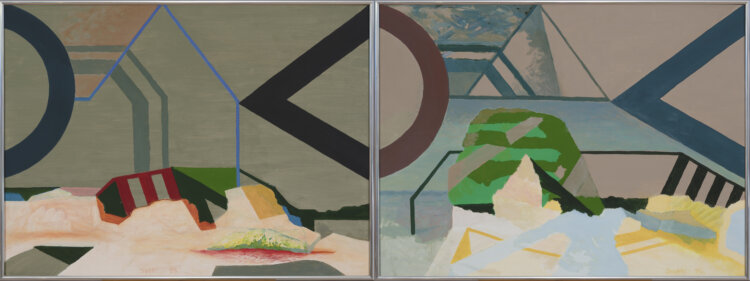

Olev Subbi “Esimene tarbetu ehitus” & “Teine tarbetu ehitus”
Kevadoksjon 2025
Acrylic on masonite. 1995.
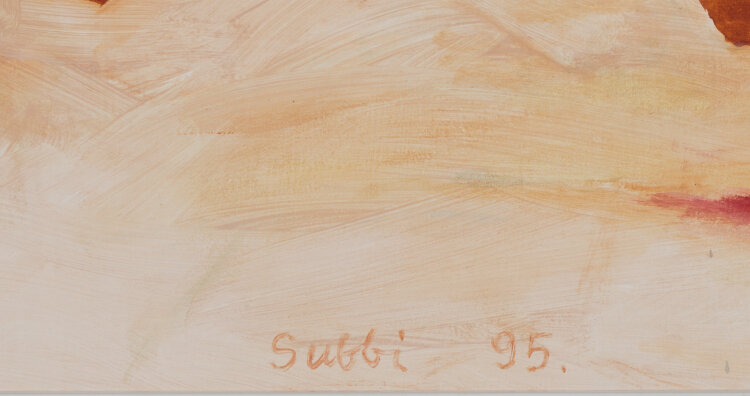
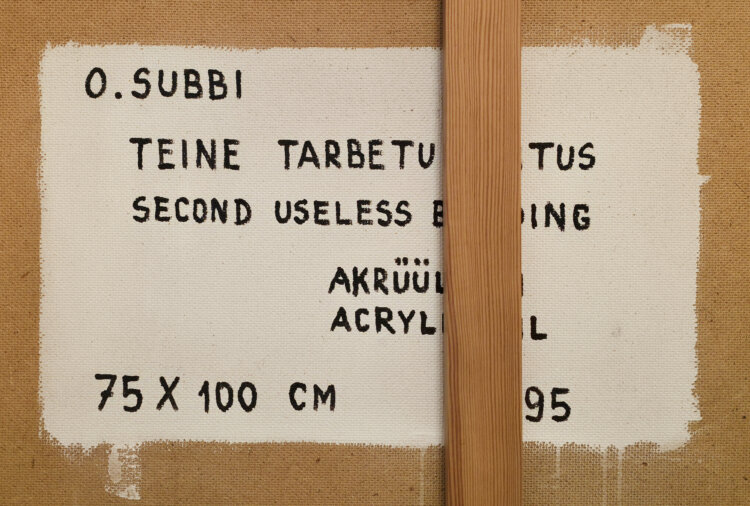
Signature 1: Subbi 95. / O. Subbi Esimene tarbetu ehitus First useless building Akrüül, acrylic. 75 x 100 cm 1995
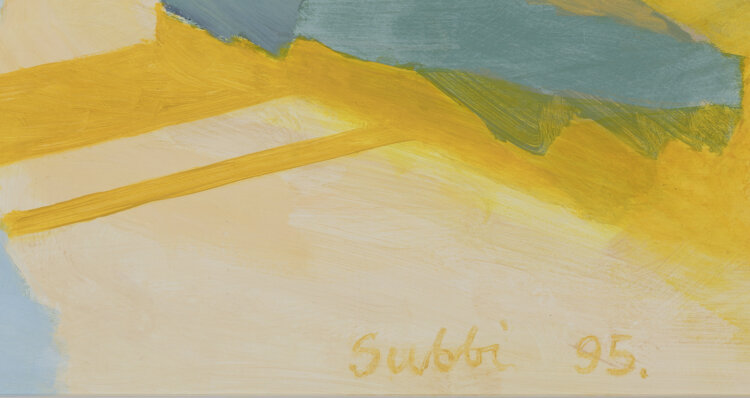
Signature 2: Subbi 95. / O. Subbi Teine tarbetu ehitus Second useless building Akrüül, acrylic. 75 x 100 cm 1995
| Measurements | Mõlemad 75 x 100 cm |
|---|---|
| Starting price | 28 000 € |
| Number of bids | 1 |
| Hammer price | 28 000 € |
This year marks the 95th anniversary of the birth of Olev Subbi (1930-2013), one of the most important modernists in Estonian painting. A man who never made compromises in his work, he was equally meticulous about the perfection of himself and his paintings. When, in preparation for the 1995 Cologne exhibition, the gallery owner there asked Subbi to rush the completion of the works, Subbi resolutely refused: “That would mean changing the method with which a painter of my age would lose a dangerous amount of his pictorial capital.” (Eero Epner “Olev Subbi”, 2024, p. 303).
In his 1990s work, Subbi was able to elegantly combine the real and the conditional but in any style, he considered himself primarily a colorist, as he manifested himself even in semi-abstract compositions. So it is here, in the twin paintings that glorify harmony. As the artist says in the title, these are unnecessary structures when separated. But together they create magic – a pair of angles and semicircles, yin and yang… and a landscape that can be guessed.
We see both the sandy seashore and the deep green forests of Estonia in the painting. However, the abstraction of constructive elements and repeating geometric lines towering above them depict an urban environment. The visual impact of the paintings stems precisely from their compositional solidity and refined use of color, as well as the associativity that they evoke in the viewer.
In this way, the viewer becomes, as it were, a co-author of the painting, to paraphrase the French semiotician Roland Barthes. Olev Subbi definitely saw these two paintings as being presented together, which is why they are being sold at auction as a pair (the price includes both pieces).
Text: Harry Liivrand, Katre Palm