
Eesti kunsti oksjonid
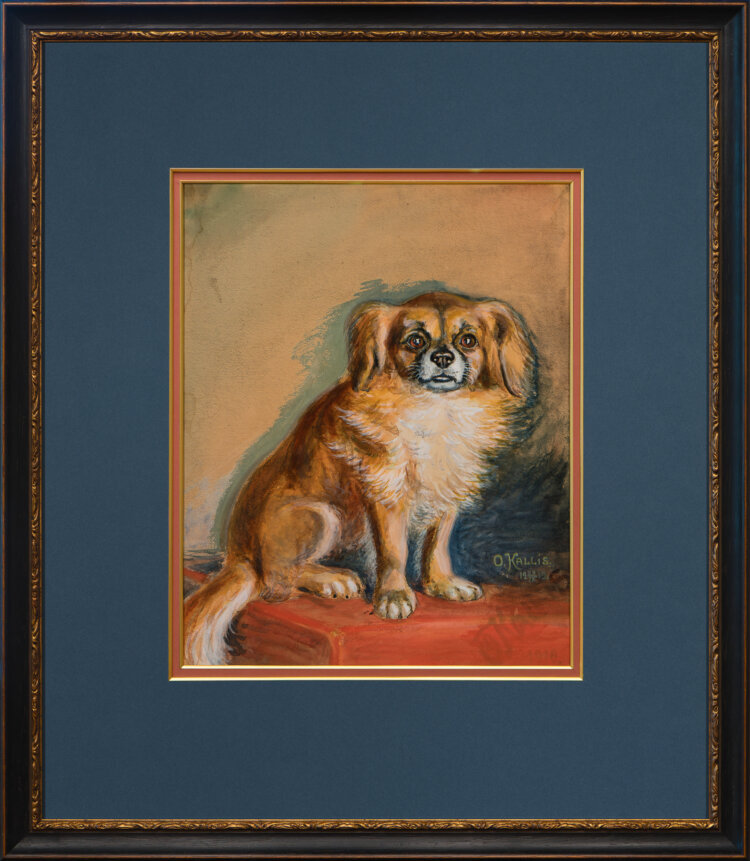
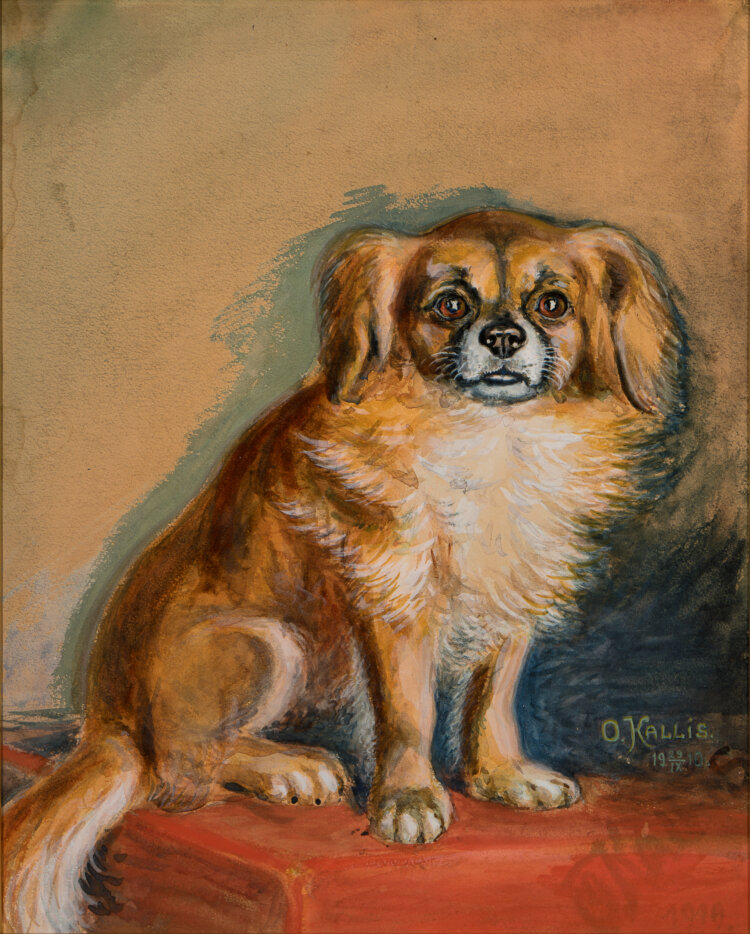
Oskar Kallis “Koer”
Kevadoksjon 2025
Mixed media on paper. 1910.
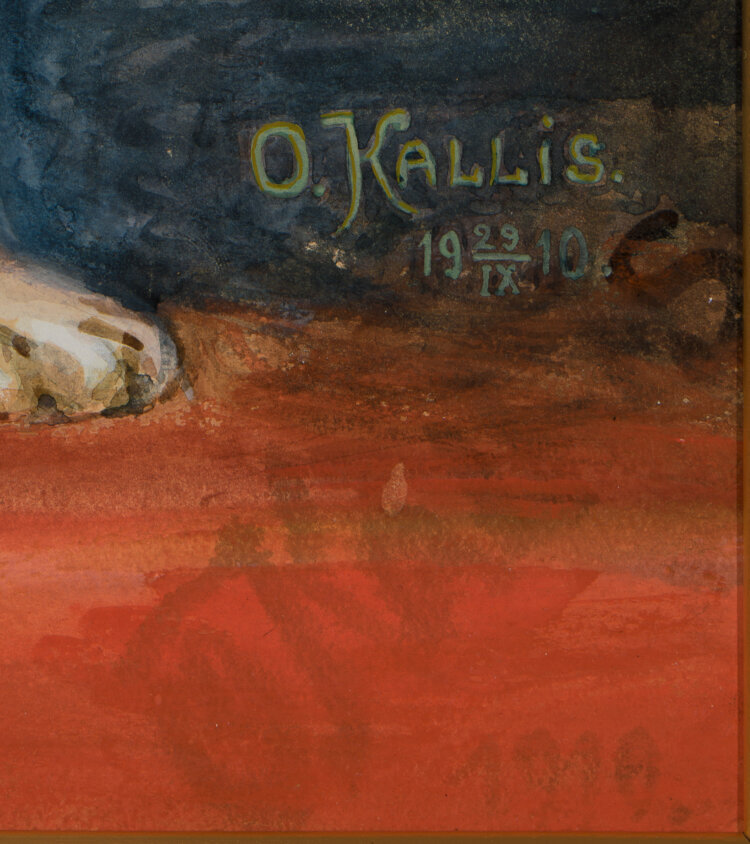
Signature: O. KALLIS 29 IX 1910
| Measurements | 40 x 33 cm |
|---|---|
| Starting price | 4 000 € |
| Number of bids | 15 |
| Hammer price | 8 400 € |
“To quote Rumi:
A soul from a soul gains knowledge,
not from a book or a language.”
Excerpt from Doris Kareva’s poem “My Golden Black Feather Tail”
Only about a dozen paintings by Oskar Kallis (1892-1918), one of the founders of the Vikerla Art Society, are known to exist in private collections – most of his work is held in art museums. Thus, the publication of this piece is a very important addition to his artistic legacy.
Ants Laikmaa played an important role in Kallis’ development as an artist, considering the young man one of his most talented students – especially in the field of composition. It was with him that Kallis began his art studies in 1904 and would have continued if the teacher had not been sent to Finland in 1907. Laikmaa returned to Estonia in 1913 and the collaboration continued but in the meantime, Kallis had also developed independently, including participating in drawing courses at the Estonian Art Society and, following his teacher’s example, developing pastel as his main technique, which he occasionally mixed with other techniques.
The man’s abilities were also noticed at a higher level, and at the beginning of World War I, Kallis was recruited as a draftsman for the Peter the Great naval fortress. However, the toll of combining intense work and artistic creation was his health. Despite the fact that the worried Laikmaa organized an opportunity for Kallis to go to Crimea to heal, one of our most promising stars died of tuberculosis at the age of only 25.
The dog, considered man’s best friend, has been depicted by several great names in Estonian art. In addition to Laikmaa, Johani, and Burman, we can now add Kallis to the list whose model’s eyes, looking deeply at the artist, are full of unquestioning trust. The animal’s desert-brown coat is given depth by the sensitive use of white, while the shadow of the evening studio light against the dog’s background creates the same effect in the space. Kallis himself apparently considered the expressive dog portrait to be successful, as indicated by the careful dating.
Text: Mai Levin, Katre Palm