
Eesti kunsti oksjonid
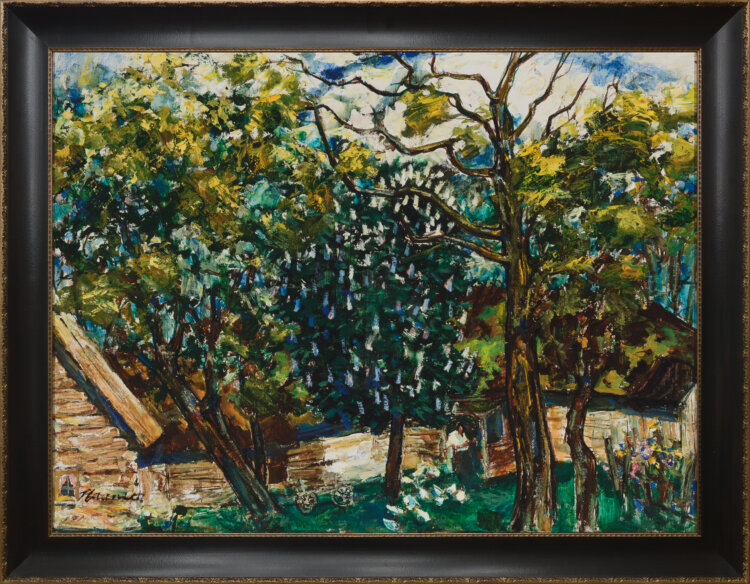
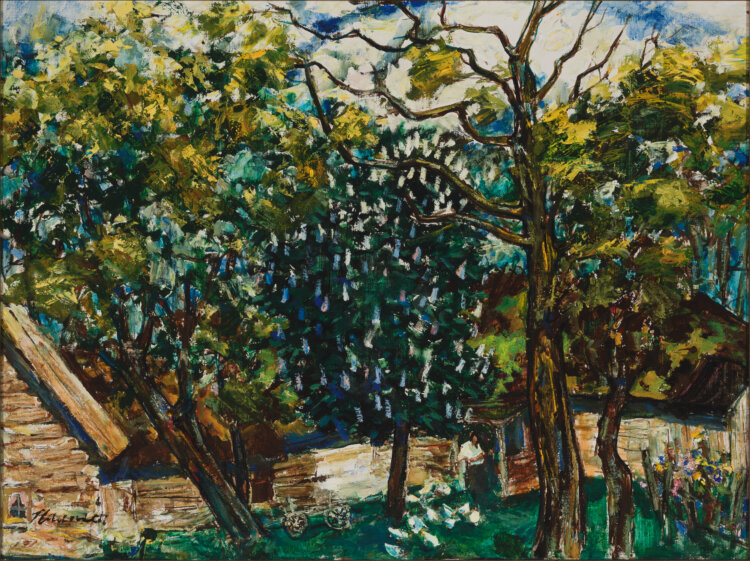
Eerik Haamer “Ruhnu. Õitsev kastan”
Kevadoksjon 2025
Oil on canvas. 1944.
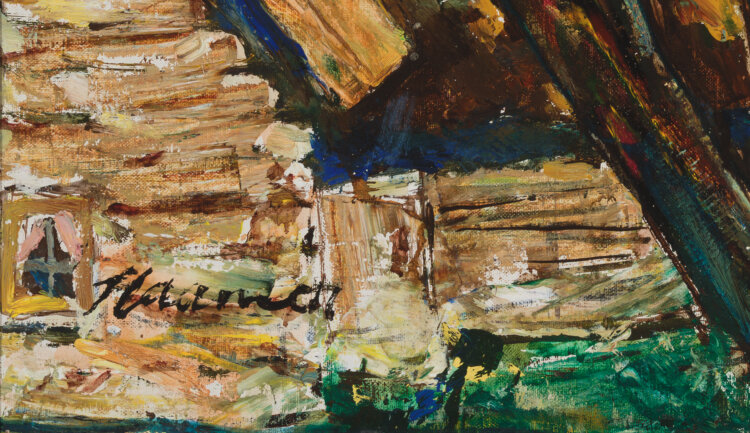
Signature: Haamer
| Measurements | 73 x 97 cm |
|---|---|
| Starting price | 16 000 € |
| Number of bids | 1 |
| Hammer price | 16 000 € |
Eerik Haamer (1908-1994) who studied at Pallas and earned the title of grandmaster of Estonian painting at an early age, spent his last summer in Estonia on two small islands, Vilsandi and Ruhnu. Art historian Reeli Kõiv has written about his experience on the latter, saying: “This small island with a white sandy beach became Haamer’s promised land, a place where he found and opened himself up creatively.” (“Eerik Haamer”, 2008, p. 125). It was there that “The exiled”, considered one of his strongest paintings as well as the pastoral landscape paintings “Ruhnu. Dark landscape” (1944, EKM) and this one, “Ruhnu. Blossoming chestnut tree” were born.
“I was especially fascinated by the evenings in Ruhnu when seal meat was cooked in the summer kitchens. When nature, houses, pine trees with dried tops and people seemed to melt into the twilight and the smoke rising from the holes. It was incredibly picturesque.” Haamer himself said of his experiences on the island (ibid., p. 108).
Man and his existential fate in his microcosm – the farm, the village above all – have fascinated Haamer from the very beginning. Arriving in Ruhnu, he sought out Bessa farm – the only place on the island where a chestnut tree grew – a tree that had become dear to him since childhood in the yard of his home farm in Kuressaare. Thus, Haamer found a link between his home island and its smaller sister island, Ruhnu. “From now on, the blossoming chestnut tree will become one of Haamer’s symbolic images, signifying a time of happiness, memories of his homeland and childhood.” (ibid., p. 120).
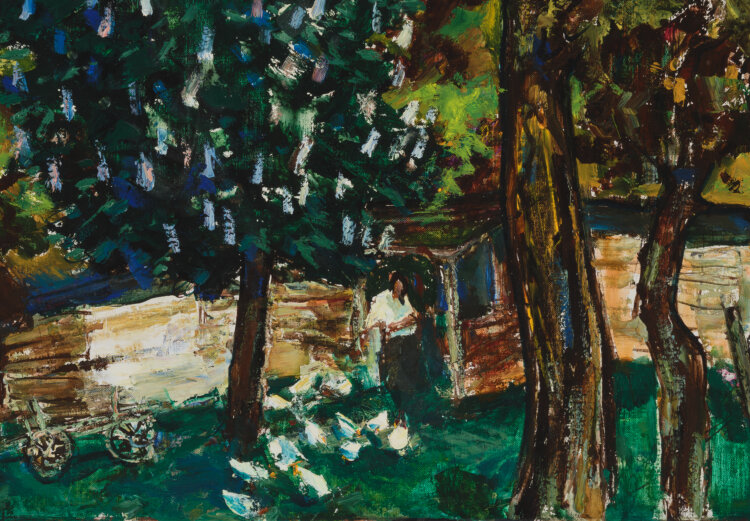
In front of the door of the farmhouse, visible from the shade of mighty trees, we see a housewife distributing grain to the chickens. Just as Haamer paints the farm almost merging with the background of the composition, he presents the female figure conditionally, without detail, emphasizing the serviceability and power of nature as a source of force. Yet Haamer captures something universally human in this figure – longing. It is as if a 17th-century mythological landscape painting opens before us, where people are only in the position of historical staffage because magnificent nature towers over everything like eternal life. “Ruhnu. Blossoming chestnut tree” is without a doubt one of the most powerful landscape paintings in Haamer’s work.
The painting was purchased from the artist by a family that fled from Estonia to Sweden in 1944, and it has been part of their collection for many decades.
Text: Katre Palm, Harry Liivrand