
Eesti kunsti oksjonid
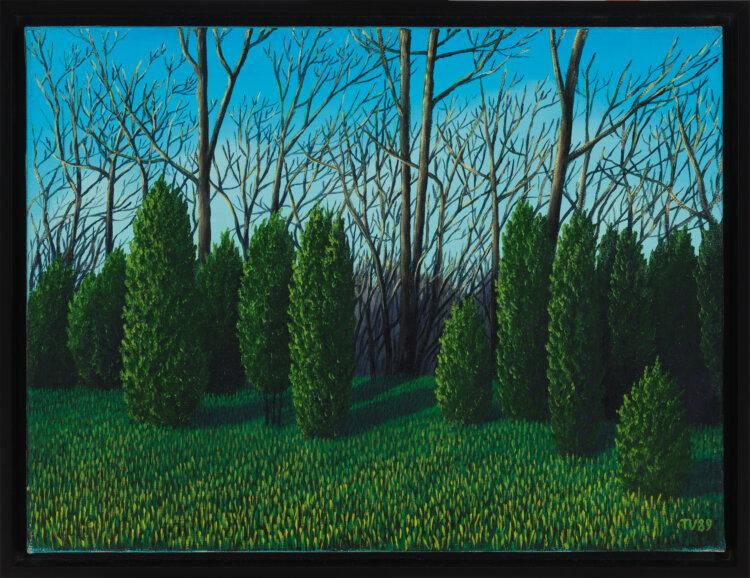

Toomas Vint “Kevadine maastik”
Kevadoksjon 2025
Oil on canvas. 1989.
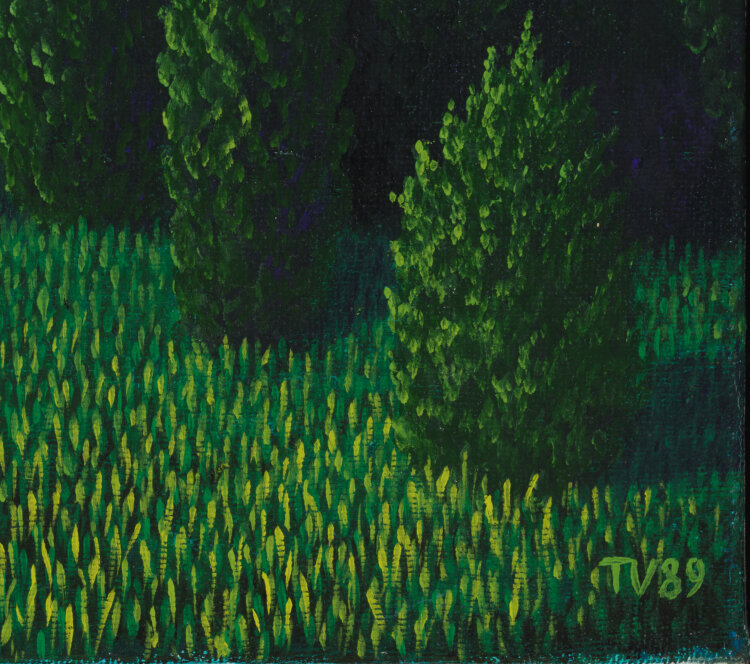
Bottom left: TV89 / “KEVADINE MAASTIK” õli 45×60 TOOMAS VINT
| Measurements | 45 x 60 cm |
|---|---|
| Starting price | 7 500 € |
| Number of bids | 26 |
| Hammer price | 18 600 € |
Toomas Vint (b. 1944), who celebrated his 80th birthday last year, became a painter in the ANK’64 sphere of influence, in which pop art was the main guiding principle. However, while he is sometimes associated with René Magritte, the latter’s technique of painting a light blue daytime sky with white cloud tufts over a night scene with black trees and lantern light comes to mind first. The well-known surrealist has explained the contradiction hidden in this as follows: day and night exist simultaneously in the world, just as the sadness and joy of different people exist at exactly the same time.
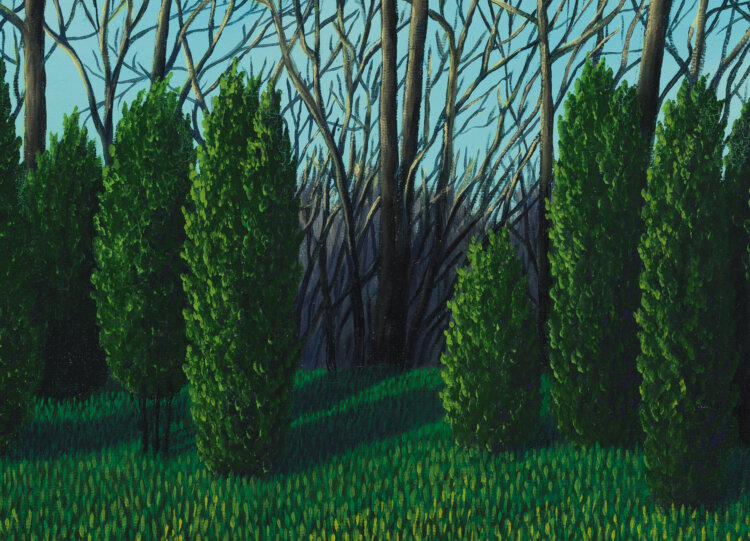
Vint’s spring landscape with deciduous trees in the ravine features his signature thick, soft carpet of grass, which is not found in nature at the same time as leafless treetops, just as the bright blue April sky is not possible with ten-centimeter growths of juniper branches — the latter appear when the grass is already waiting to be mowed and the sky is pale summer blue. At the same time, Vint has sometimes painted the light of nature and the shifting shadows very sensitively. Most of the time, however, his light is cold, typical of surrealism.
Does he want to say, along with Magritte, that spring, summer, autumn and winter are all parts of one whole? Or is it more of a pop artist’s attitude with a touch of irony, in which all these seemingly incompatible things together express the city dweller’s romantic vision of nature?
Text: Vappu Thurlow