Eesti kunsti oksjonid
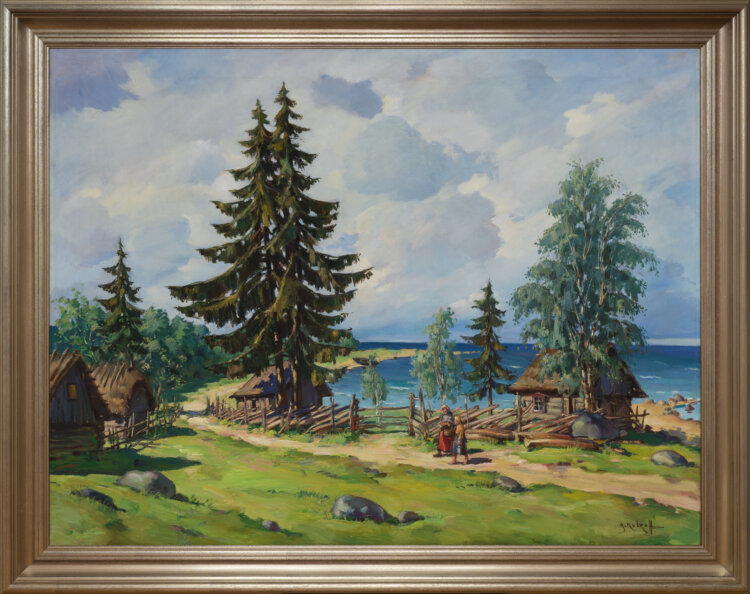
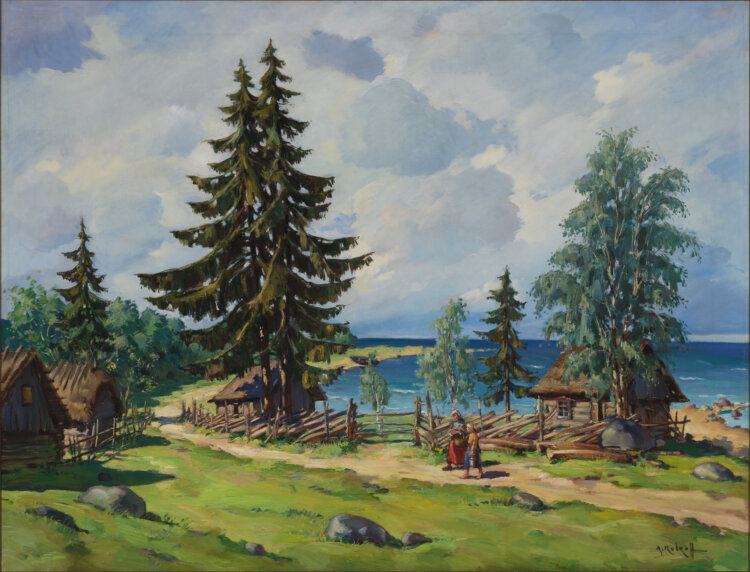
Aleksander Kulkoff “Rannaäärne külatee. Salmistu”
Kevadoksjon 2025
Oil on canvas. Late 1930s/early 1940s.
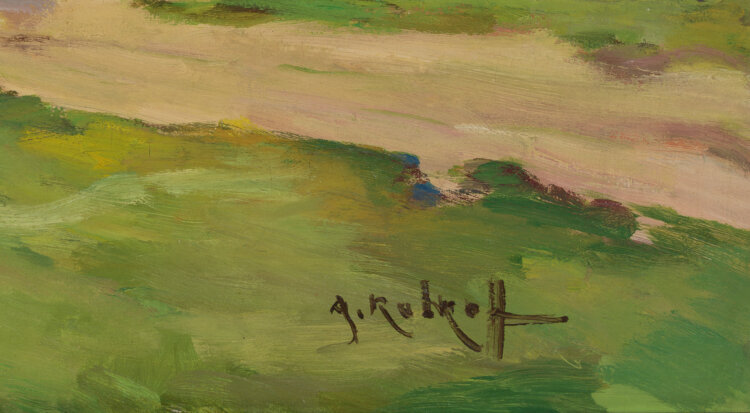
Signature: A. Kulkoff
| Measurements | 104 x 135 cm |
|---|---|
| Starting price | 39 000 € |
| Number of bids | 1 |
| Hammer price | 39 000 € |
Aleksander Kulkoff, a versatile artist who settled in Estonia at the age of 29, worked as a painter in various different styles but impressionism and art deco were the backbone of his work. Estonian art critics received his work well, and among others, one of his greatest admirers was the first president of Estonia, Konstantin Päts, who entrusted him with painting a personal self-portrait, which was ceremonially presented for the first time in Kadriorg in 1938. In addition, Kulkoff’s work includes religious and historical compositions, genre paintings, works of North African scenery, and landscapes. His lush impressionistic style was also influenced by the neo-objective-expressionist movement of the 1920s and the neo-classicism of the 1930s, and captivated the local audience.
The themes of rural and coastal life, which became popular in the second half of the 1930s, were also reflected in his work. The nature and villages of the northern coast captivated Kulkoff with their genuine directness – the famous artist who spoke Estonian fluently and enthusiastically, was always warmly received there. This painting is most likely one of the landscapes inspired by Salmistu, which he presented at the spring exhibition at the Art Hall in 1942 and the Christmas exhibition in 1942/43.
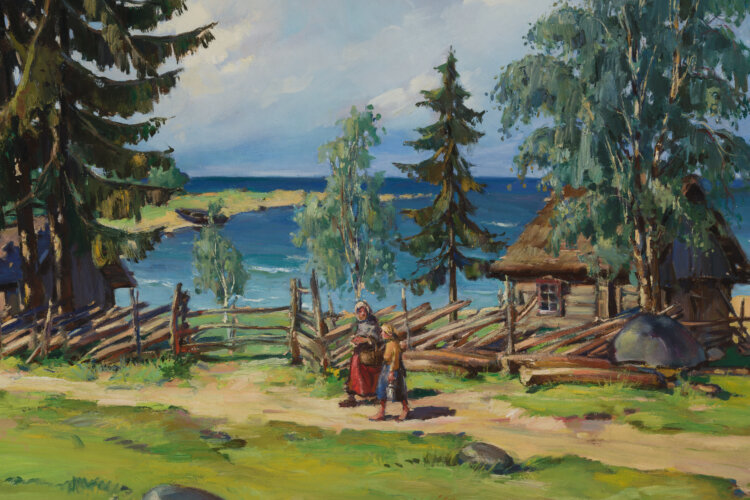
The influence of neoclassicism is felt in the grandiose concept of the landscape, the clarity of form and purity of color, in the spacious expanse towering over the village idyll. The spacious coastal view has given Kulkoff the opportunity to realize his painting skills in the pastoral landscape painting genre, reducing the two figures walking in the foreground to just a part of it. But it is these two women – probably mother and daughter – who define the atmosphere and narrative of the work. A monumental work in both execution and format!
Text: Mai Levin, Harry Liivrand, Katre Palm