
Eesti kunsti oksjonid
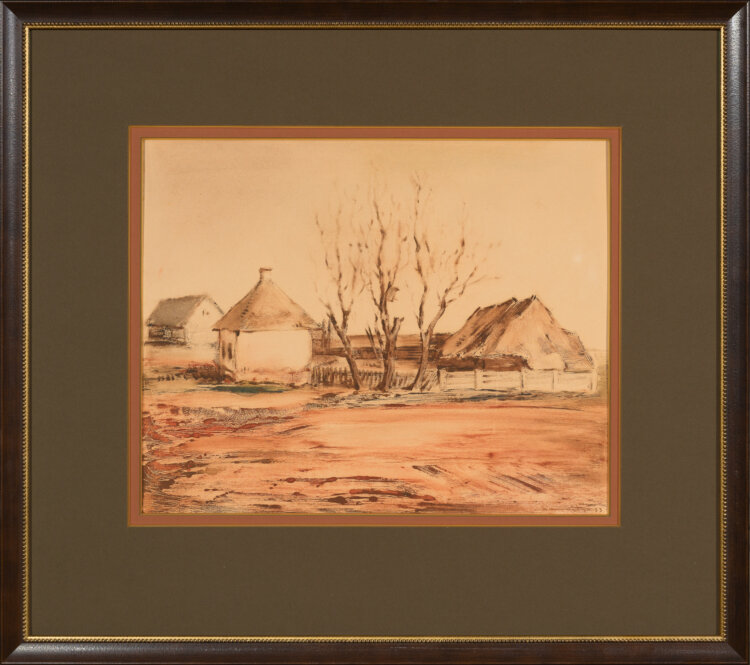
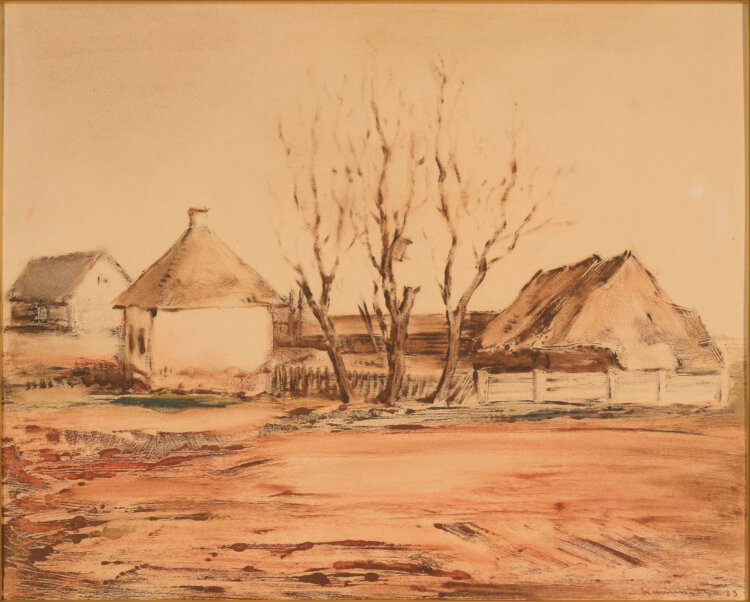
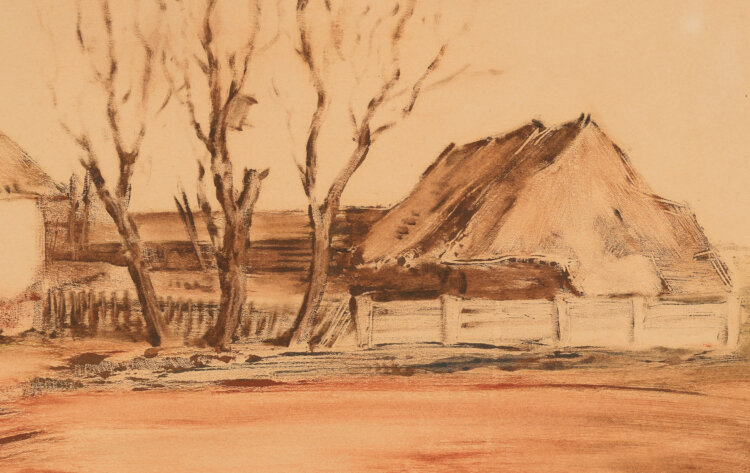
Nikolai Kummits “Talumaastik puudega”
Sügisoksjon 2024
Monotype on paper. 1933.
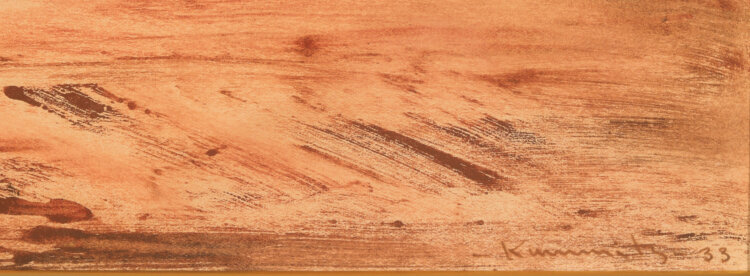
Signature: Kummits 33
| Measurements | Ava 35 x 43,5 cm |
|---|---|
| Starting price | 2 500 € |
| Number of bids | 21 |
| Hammer price | 7 600 € |
Nikolai Kummits (1901-1944) studied at Pallas from 1921 to 1929, graduating in painting at Ado Vabbe’s studio. His main subject matter was the life of simple people, among whom he lived in the Ülejõe district of Tartu and who were also numerous in the surrounding villages.
Kummits represented the realism that prevailed at Pallas at that time, empathetic to everyday life, which grew out of the modernism that prevailed after the First World War and was sealed by the economic crisis of 1929-33. Monotype, as a technique between printmaking and painting, was very popular in Pallas since Eduard Wiiralt’s works of 1923-25.
Kummits’ first known monotype is “Melancholia” (1930, Estonian Art Museum). It is a monochrome monotype of which, according to Kummits’ biographer Linda Alekõrs, very few are left (Alekõrs, 1966, p.32). “Farm landscape with trees” is also based on deep shades of brown.
At that time, Pallas loved the tonality of brown influenced by Rembrandt whose work was highly respected. The artist’s way of imagining is deeply engaging and sensitive and represents precisely that sincerity and effect achieved with minimal means that particularly impressed, for example, Leonhard Lapin.
Text: Mai Levin